For many first-time homebuyers, the challenge often lies in making the financial numbers work. It can feel like a tightrope walk between budgeting, saving, and the ever-changing property market. Despite all that hard work, the final goal can feel elusive. But here’s the thing: income is just one piece of the affordability puzzle. Your choice of location plays an equally significant role, especially for those who can work remotely.
Work Flexibility: A New Frontier for Homebuyers
As our professional landscape shifts, particularly in the realm of remote work, the implications for homebuyers are profound. For instance, FlexJobs recently reported a notable 22% increase in remote job postings from the previous quarter, marking the second consecutive quarter of significant growth. This surge is not just a statistic; it signals a broader acceptance of remote work as a permanent feature in many industries. Buyers can now think beyond their current geographic confines, which is a game changer for affordability.
As Forbes aptly notes, “Remote employees, freelancers, consultants, entrepreneurs, and business owners have the flexibility to choose a home base based on the life they want to build.” This flexibility not only empowers individuals to move to areas with lower living costs but also encourages them to seek environments that resonate with their desired lifestyle, whether that’s a quiet cottage in the mountains or a vibrant city apartment. Imagine being able to buy a bungalow in a scenic area for a fraction of the cost you would pay in a high-demand urban center. It redefines what's possible.
Maximizing Your Salary by Choosing the Right Location
The cost of living in various states can markedly affect affordability, influencing not only what type of home you can purchase but also your overall lifestyle. Data from Extra Space indicates significant variations in living costs across the country. In fact, some areas are substantially cheaper than the national average. For instance, Mississippi features a cost of living approximately 17% less than the national average, while West Virginia is about 15% lower. These figures are compelling; they can drastically widen the type of properties available to those who are flexible in their locations.
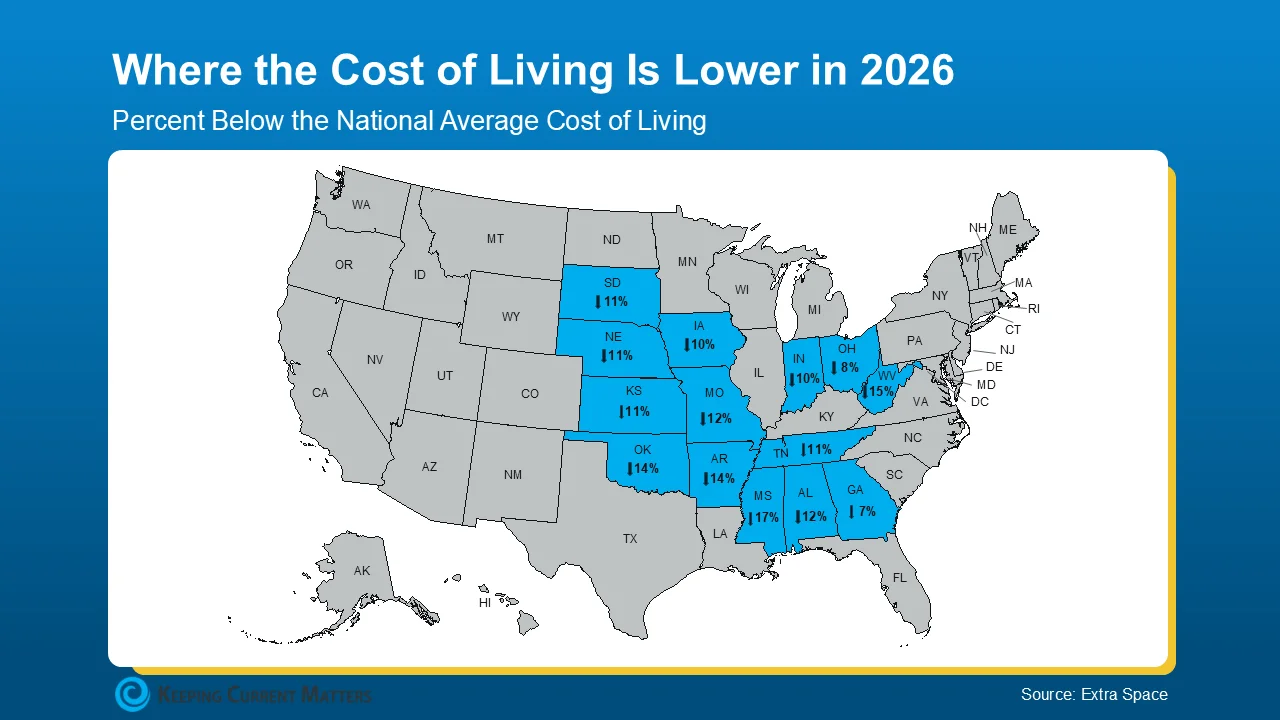
Reduced daily living costs can allow buyers to allocate a larger portion of their income towards homeownership, fundamentally reshaping their purchasing power. This shift isn’t just about numbers; it’s about changing the very definition of homeownership for many Americans. As highlighted by the Relocate Right team, “Remote work has fundamentally changed the calculus of where to live.” This allows buyers to prioritize practical considerations—such as financial feasibility—while still keeping personal preferences in mind when they’re looking at new locations.
What to Consider as You Make Your Move
While a lower cost of living is compelling, other factors will impact your adjustment to a new home. It’s vital to assess aspects that may not be quantifiable on a budget spreadsheet. Consider whether:
Is internet connectivity reliable enough to support uninterrupted remote work?
Will you be able to easily integrate into the community and establish a social network?
Do nearby amenities like public transport and dining options meet your lifestyle needs?
These questions may seem trivial at first glance, but they can hugely impact your day-to-day satisfaction. A local real estate agent can provide invaluable insight in this context. They can guide you in evaluating potential neighborhoods—some of which may be more affordable than you realize—while ensuring they align with your lifestyle preferences and financial capabilities. An agent won’t just steer you toward the “hot” neighborhoods but will also help you discover hidden gems that offer the desired balance of affordability and amenities, from parks to quality dining options. (And this is the part most people overlook.)
Future Implications for Homebuyers
With remote work facilitating greater freedom in choosing where to live, the dynamics of home buying are shifting. Affordable housing options that might have previously been overlooked are now more accessible than ever. For many, this opens doors that once felt firmly shut. Buyers have the opportunity to choose homes that truly align with their personal and professional aspirations rather than being shackled by local job markets.
Engaging with a local real estate expert can help you explore these new options and shape a living situation that aligns with both your budget and lifestyle aspirations. That said, you shouldn’t rush into decisions. Take your time to think about what fits best—both financially and personally. In light of these changes, understanding market conditions and evaluating long-term value will be essential. Buyers will need to balance immediate financial realities with future expectations, which requires a blend of caution and optimism. What this means for you is clear: the market might just offer opportunities that didn’t exist a few years ago.