Common misconceptions suggest that newly constructed homes are generally pricier than existing ones, but the current market dynamics tell a different story. In numerous regions, newly built homes are more affordable, with builders actively lowering prices and offering incentives to stimulate sales.
Affordability Benefits of New Homes
According to recent findings from the Census Bureau and the National Association of Realtors (NAR), a newly built home costs approximately $40,000 less than its existing counterparts on average (refer to the graph below):
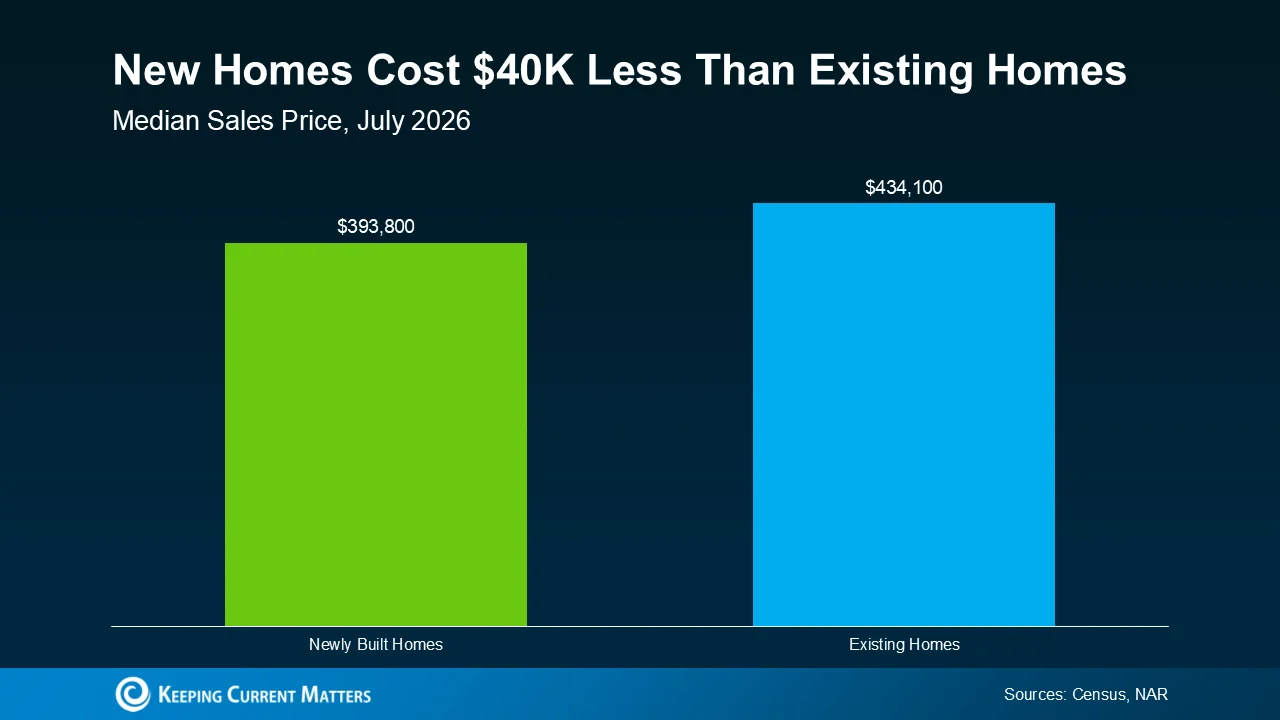
This trend signals a potentially significant shift in the market. As builders face the pressure of excess inventory, many are compelled to offer lower prices to attract buyers. Traditional wisdom has always held that new construction comes at a premium, often due to the perceived value of brand-new amenities and the allure of customizable options. However, the ongoing need to liquidate available homes has altered this assumption.
Builders are not only lowering prices but also enhancing buyer incentives. According to data from the National Association of Home Builders (NAHB), the latest trends reveal:
-
35% of builders implemented price reductions with an average discount of 6%.
-
63% are providing incentives, such as covering closing costs or reducing mortgage rates.
These incentives can significantly impact your total cost, both initially and in long-term payments. Newly constructed homes typically come with warranties and are less likely to require immediate maintenance compared to older properties. This reduction in immediate expenditure potentially maximizes your financial advantage. Given the current affordability climate, every dollar saved can be pivotal in financial planning. Buyers should keenly analyze these opportunities, as negating the assumption that new homes are exorbitantly priced could lead to fruitful investment.
Thus, it's wise not to dismiss new builds prematurely. The assumption that they are always more expensive does not hold true in the current market, and potential homeowners would do well to explore their options thoroughly.
Choosing the Right Representation
Before stepping foot into a model home, it’s critical to understand who’s advocating for your interests during negotiations. The sales representative at the builder's office works for the builder, not for you, making it essential to have your own real estate agent.
Your agent plays an integral role in this process. They’ll provide thorough insights into local market conditions, ensuring that the builder's pricing and offers align favorably against other nearby options. Their understanding of recent transactions in the area can provide a competitive edge during negotiations. They’re your ally in achieving better prices, securing upgrades, or negotiating more favorable financing terms.
Additionally, a qualified agent will recommend conducting a home inspection, a pertinent step often overlooked with new constructions. Many homebuyers assume brand-new homes don't require inspections — but that's a risky assumption. It's not uncommon for newly constructed homes to encounter issues that need addressing. Having your agent by your side means you’re well-informed and empowered to secure the best possible deal on your new home, and you can avoid potential pitfalls.
Future Outlook and Implications
The current trends in the housing market, where new constructions are frequently priced lower than existing homes, imply a shift in consumer preferences and building strategies. As more buyers turn to new builds, we could see a new equilibrium where builders adjust their strategies in response to market demand. The incentive structures being employed may continue as a tactic for builders to maintain sales volume amidst fluctuating economic conditions. Consumer expectations, particularly with regard to cost versus value, will evolve as buyers become more educated about their options.
If you're working in this space, it's essential to adapt to these changing dynamics. Builders who can efficiently manage costs while delivering value will thrive. Moreover, the principles of negotiation and representation should be noticed, especially for first-time buyers. The emphasis on securing the best deal isn't just about price; it also involves understanding the full scope of ownership costs, which includes future maintenance or upgrades.
Ultimately, knowing the landscape of the new construction market is vital for both builders and buyers. Monitoring these trends will be key to making informed decisions moving forward. You don't want to find yourself out of touch with these developments — being proactive now will yield long-term benefits.
Conclusion
New homes can be less expensive than existing properties in today’s market, presenting a valuable opportunity to purchase a brand-new home at a competitive price. If you’re interested in finding local new home communities currently offering incentives or discounts, consult a knowledgeable local agent. Having representation ensures you receive an advantageous deal and maximizes your buying potential. After all, returning to established beliefs about housing costs without considering current facts could leave you missing out on prime opportunities.