Introduction to Intro Columbus
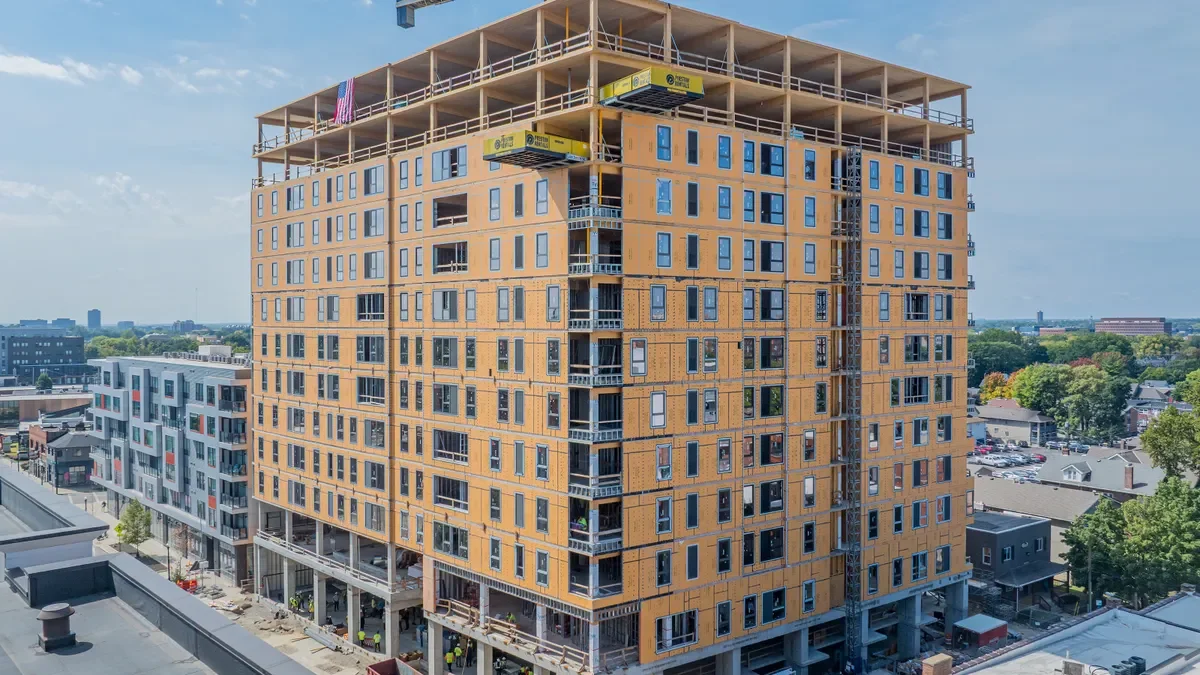
A new student housing development adjacent to Ohio State University is setting a significant precedent in mass timber construction. Named Intro Columbus, this project has reached its topping-out milestone approximately 10 weeks ahead of the anticipated November completion date. This isn't just another student housing development; it represents a shift in how we approach construction, especially in the context of higher education.
The Structure and Its Heightened Ambition
The 13-story structure will stand at 158 feet and encompass 242,000 square feet, making it the tallest mass timber student housing facility in the United States upon completion. With 186 residential units planned, Intro Columbus is utilizing timber not only for its aesthetic appeal but for its environmental advantages. As colleges and universities are under pressure to provide sustainable options for students, this development might set a standard others will follow.
What’s particularly striking about this project is its construction speed. The design and construction consortium, including Elford Construction as the general contractor, achieved impressive milestones by utilizing glulam columns and beams alongside cross-laminated timber (CLT) panels. The team managed to erect two-and-a-half floors every two to three weeks. Such efficiency is rare in the construction industry, which often struggles with delays and cost overruns. The energy savings from reduced construction times can be significant, an aspect that aligns with sustainability goals.
The Execution: A Testament to Teamwork
The construction team’s ability to install 44 CLT panels daily highlights a lesson that often gets overlooked in today's project environments: teamwork matters. Shane Warner, Elford Construction's superintendent, emphasized how coordinated cooperation was vital for the project’s success. It's a reminder that a well-organized team can drastically cut down timelines without sacrificing quality.
Groundbreaking took place on September 8, 2025, with plans for completion in 2027. This scheduling serves not just to meet housing demands but also to facilitate critical aspects of construction, such as interior framing and MEP rough-ins. Early completion allows for the installation of external wall panels and windows on the lower floors—a deciding factor for speed in project completion. With many projects struggling to keep to timelines, this initiative could inspire fresh approaches in management practices across the industry.
Environmental Impact and Material Sourcing
The timber used for the Intro Columbus structure is sourced specifically from Alabama. This choice not only supports regional industries but contributes to the project's sustainability profile. It’s reported that the development is expected to sequester an estimated 1,128 metric tons of carbon compared to traditional materials like steel and concrete. As pressure mounts on the construction sector to consider environmental impacts, projects like this could help shift norms toward more sustainable practices.
This project isn’t just about building fast; it’s about building smart. The benefits of mass timber are gaining traction across various sectors. Many industry professionals are pivoting towards timber, primarily due to the rising prices of steel. The construction sector often has to adapt to fluctuating material costs, and timber may become increasingly appealing for diverse applications beyond housing. Organizations such as Skanska are discussing its potential for innovative spaces like data centers. This pivot could reshape construction practices for years to come.
Implications for the Future of Student Housing
The implications of the Intro Columbus project extend beyond its immediate location. If you're working in this space, the architectural and construction strategies applied here could influence future developments. Mass timber not only offers sustainability benefits but also presents new opportunities in design flexibility that traditional materials often restrict. As more universities adopt this approach, we may see a rise in similar projects aimed at reducing carbon footprints.
Other key players in this collaboration include Forefront Structural Engineers from Chicago and SmartLam North America, a mass timber producer based in Dothan, Alabama, along with Coastal Ridge, a Columbus-based property manager. This blend of regional and national talent may serve as a blueprint for future collaborations in student housing as schools look to streamline their construction processes while keeping sustainability at the forefront.
The construction industry often feels stuck in conventional methods, hesitant to change. Projects like Intro Columbus challenge this status quo. They provide not just a roof over students’ heads but also a potential paradigm shift in how we think about housing in educational settings. Keep an eye on this project—it's more significant than it looks, and the influence may ripple out to other sectors.