Gone are the days when sellers dominated the housing market, leaving buyers feeling pressured to offer above asking prices or forgo inspections to secure a property. We're seeing a notable shift in favor of buyers across many markets, heralding a more balanced approach to real estate transactions. This transformation is more than just a trend; it's a significant redirection in market forces that could redefine the way buyers and sellers interact in the future.
Market Dynamics Evolving
Recent national data unveils a situation transforming towards buyer advantage. According to Realtor.com, the national housing market is now gradually loosening, shifting towards a more equitable scenario for buyers:
“The national housing market is balanced but gradually moving in a more buyer-friendly direction.”
This notable change is attributed to an increase in inventory, which began tilting major metros away from 2021's seller-stronghold toward more accommodating terms. Specifically, back in 2021, nearly all prominent metros favored sellers. Fast forward to 2025, and only a third remains in that position. If you analyze the trajectory, it’s clear that the pent-up demand from the last several years combined with more homes hitting the market is reshaping what’s possible for buyers. (Refer to the graph below)
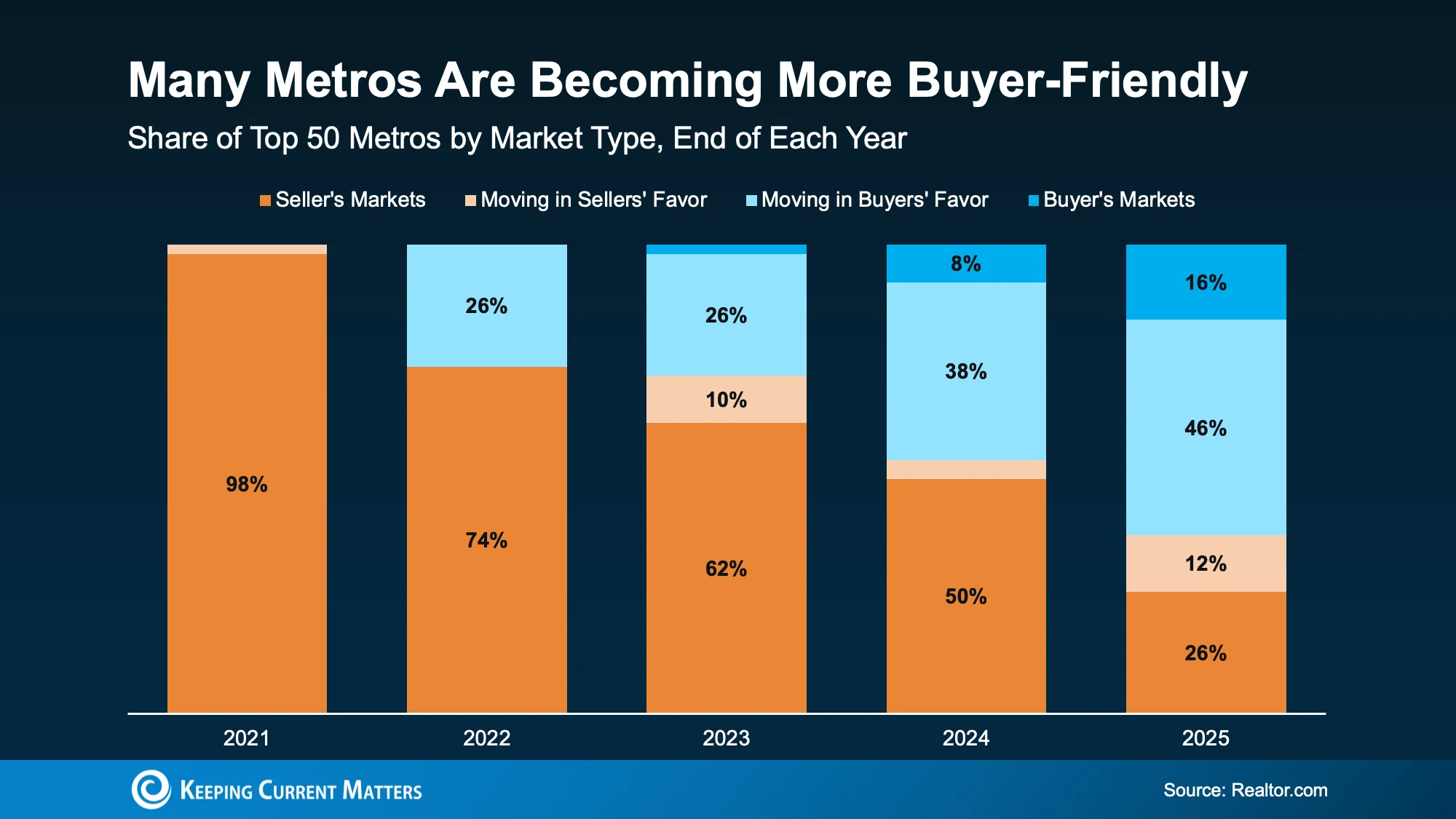
This evolving dynamic isn't uniform; expectations on both sides need recalibrating. Sellers should refrain from clinging to 2021's market conditions, while buyers shouldn't rush in with those expectations either. Both parties should adopt a mindset that accepts the shifting reality: current conditions aren’t the same as they were two years ago. Adjusting to this new normal is imperative if either side wants to achieve a successful transaction.
Regional Variability in Market Power
Geographic distinctions heavily influence who holds market power, illustrating that while some areas trend towards favoring buyers, others remain staunchly seller's markets. The determining factors hinge on local housing supplies and demands, which can drastically differ across regions. This variability can lead to starkly different experiences for buyers and sellers based on where they’re located.
Consider Sun Belt cities such as Austin and Tampa, where a recent surge in construction has broadened options and enhanced negotiation leverage for buyers. The influx of new developments is creating a competitive environment that empowers buyers to inspect homes and exercise more patience in their choices. In contrast, cities in the Northeast and Midwest, like Rochester and Buffalo, continue to experience high demand and limited inventory, intensifying competition. As Jeff Ostrowski, Housing Analyst at Bankrate, highlights:
“The formerly hot Sun Belt markets have cooled, while the Northeast and Midwest have stayed hot. The big driver here is construction activity.”
What this points to is that you can't take a one-size-fits-all approach when operating in the real estate market. The coming months will require buyers and sellers alike to stay informed about local conditions, which can shift rapidly due to changes in popular trends or economic factors.
Strategic Insights for Navigating the Market
The current state of the market dictates an informed approach by both buyers and sellers. To tailor your strategy effectively, a conversation with a local real estate agent is indispensable. They can provide insight into the local market dynamics essential for formulating a successful strategy. Without localized guidance, it’s easy to make missteps that could prove costly.
If you're buying in a seller's market:
-
Invest time in obtaining pre-approval to demonstrate your commitment to potential sellers. It signals to them that you're serious about purchasing and that they won’t have to wait while you secure financing.
-
Be prepared to act swiftly as desirable homes become available. If you see a property that’s perfect for you, don’t hesitate; you may not be the only person interested.
-
Consider proposing a quick closing date or accommodating terms that appeal to sellers. Flexibility can often make your offer stand out in a crowded field.
-
Collaborate closely with your agent to craft a strong, competitive offer. A well-structured proposal can convey your seriousness and intention, setting you apart from less prepared buyers.
If you're selling in a buyer's market:
-
Set the right price from the outset. Overpricing can lead to extended market times and financial drawbacks. Properties that linger unsold often yield diminishing returns.
-
Enhance curb appeal and consider staging your property to attract buyers amidst heightened competition. Sometimes, a little effort in presentation can make a big difference.
-
Explore offering incentives, such as covering closing costs or providing a home warranty. These small gestures can tip the scales in your favor, especially if you’re competing with multiple listings.
-
Anticipate negotiations and remain open to flexible terms. The more adaptable you are, the higher your chances of closing a deal.
Looking Ahead
With diverse market directions emerging, your approach as a buyer or seller should reflect the realities of your specific local conditions. Understanding these nuances is vital for navigating potential moves effectively. For tailored guidance, a local real estate professional can help you gauge which way your market is leaning and how best to strategize accordingly. The coming months will likely bring continued adjustments as economic factors shift and consumer sentiments evolve.
Yet, one thing’s clear: navigating this market won’t be simple. You’ll need to stay informed and adaptable as conditions evolve. That's the only way to stay ahead.