Many potential homebuyers are hesitant to enter the market, fearing that home prices will slump. This perception is causing some buyers to delay their purchases, anticipating better deals in the future. However, the reality is more nuanced than the prevailing sentiment might suggest.
-
Some buyers believe a downturn is imminent, leading them to wait for lower prices.
-
Others worry about making a purchase now only to see home values decline later.
Here's the pivotal question: What if the anticipated crash doesn’t occur?
Current Market Insights
With rising speculation about a downturn, it's easy to get caught up in the narrative of a crashing market. While there are isolated instances of diminishing prices in some areas, these are not indicative of a nationwide crash. In fact, according to data from Realtor.com, home prices are still appreciating in approximately 71% of housing markets across the country.
This data points to a significant development in the housing market. As local economies vary, some regions continue to thrive while others may see temporary declines. The focus on negative news generates a misleading impression that prices are universally falling, overshadowing the significant number of markets that continue to show appreciation. So, how can buyers gain clarity on where prices are heading?
This is where the Home Price Expectations Survey (HPES) from Fannie Mae provides invaluable insight. The survey, which aggregates insights from a large pool of economists and analysts, offers a crucial lens for understanding market movements rather than relying solely on sensational headlines.
Five-Year Outlook on Home Prices
Quarterly, more than 100 economists and housing experts share their expectations for home prices based on current market data. Despite the prevailing uncertainty, there’s a clear consensus among these professionals:
A significant crash isn't on the horizon.
Overwhelmingly, their forecasts indicate home prices will rise each year for the next five years, as illustrated below:
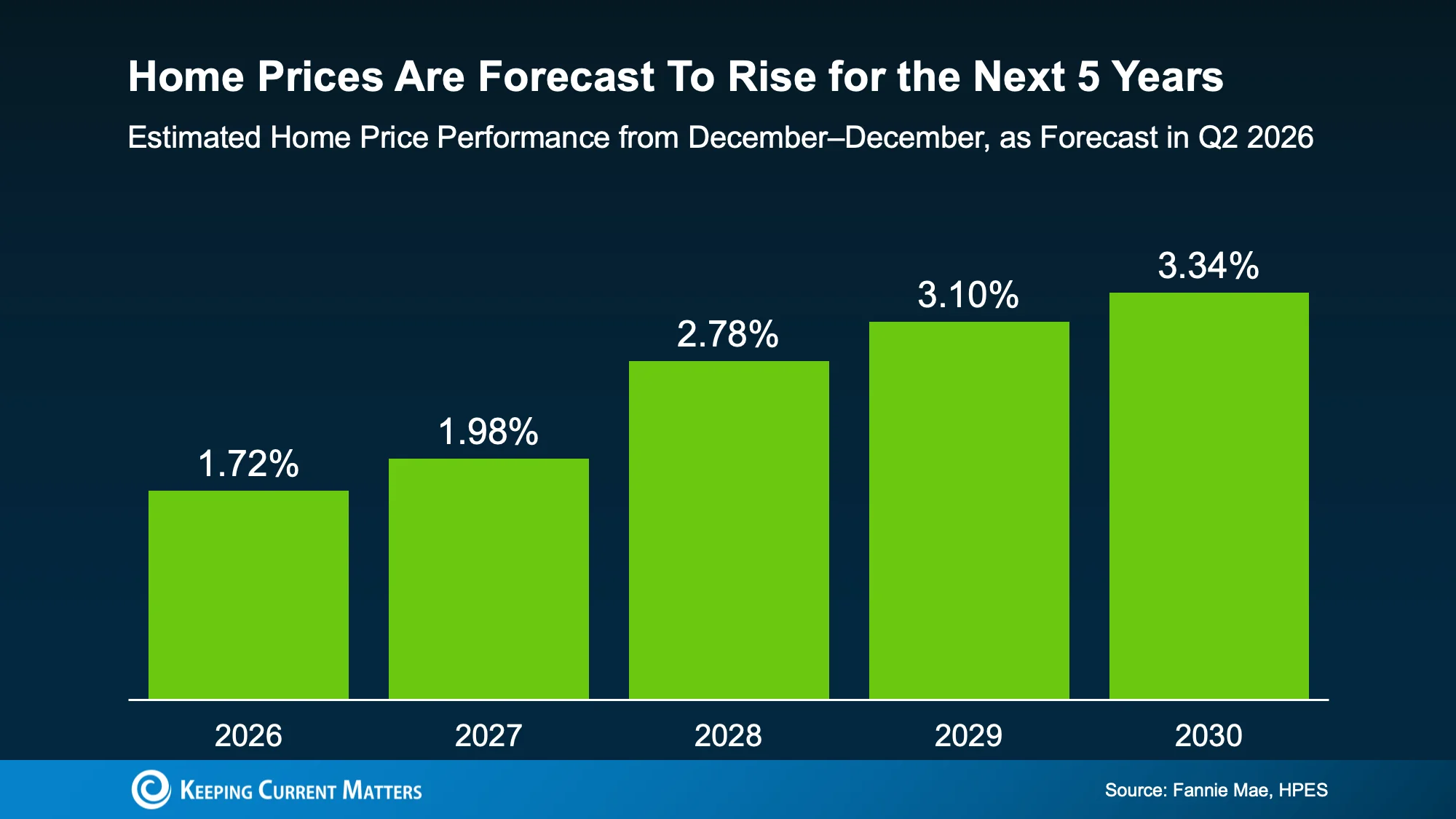
This collective outlook suggests a return to typical appreciation rates rather than an impending crash. What's telling is the consistency among economists. Their outlook hints at economic fundamentals supporting the continued rise in home prices, such as low housing supply and sustained buyer demand.
Pessimists Still Expect Price Growth
Interestingly, even the most skeptical experts in the survey believe that home prices will continue to rise over the next five years. The optimists forecast a growth of about 4% annually, while pessimists predict increases closer to 1%. The reality likely falls somewhere in between.
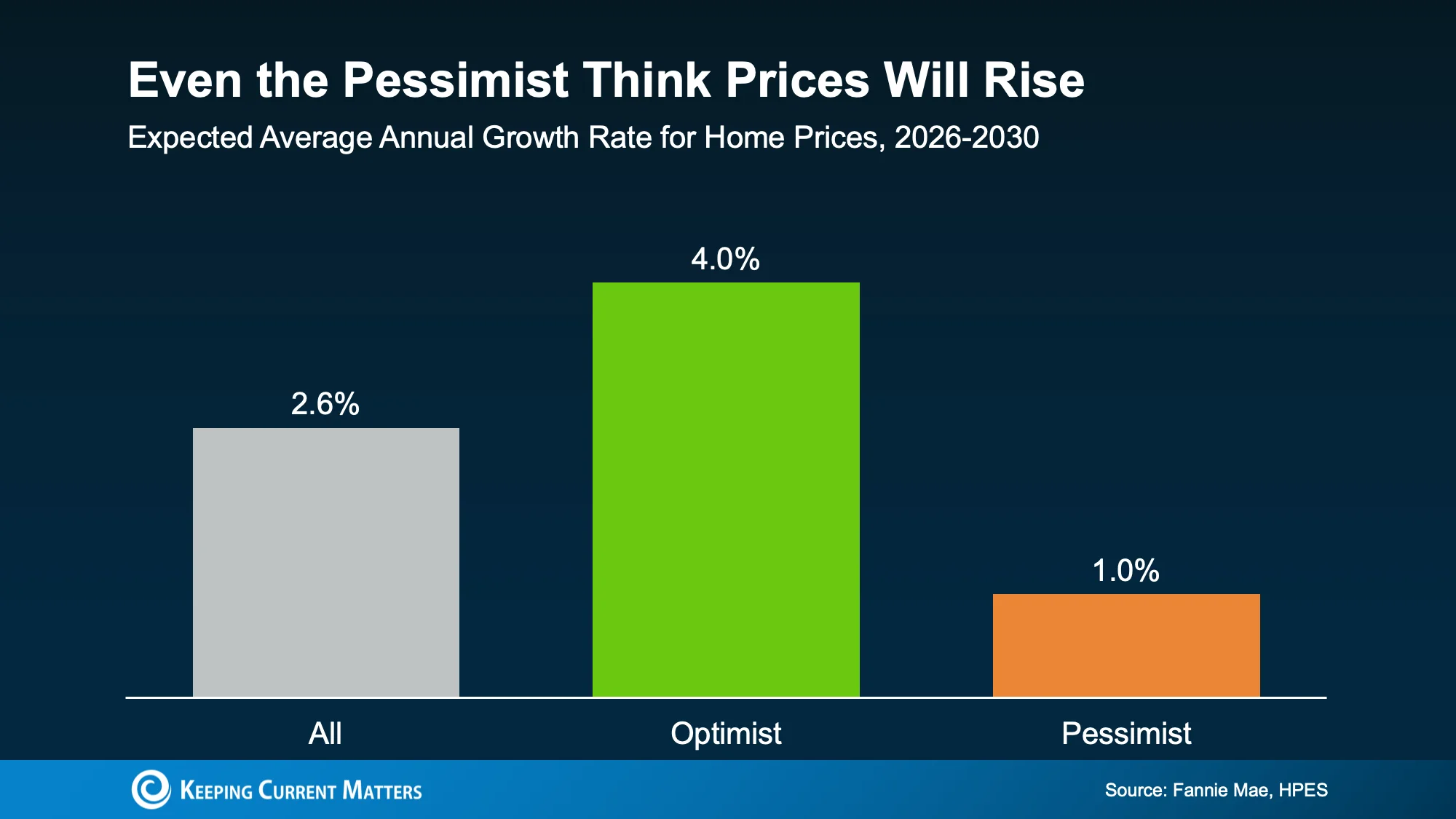
Consider this: the debate among experts isn’t about whether prices will crash; it revolves around the extent of anticipated growth. This is a vastly different discussion from what’s often portrayed on social media platforms, where fear and speculation can drive narratives far from statistical reality.
Implications of Waiting
For those delaying their buying decisions, the expert consensus suggests that a widespread market crash is unlikely. In fact, the HPES forecasts reveal that a buyer purchasing a $400,000 home this January could gain around $40,000 in equity over the next five years through appreciation, as shown below:
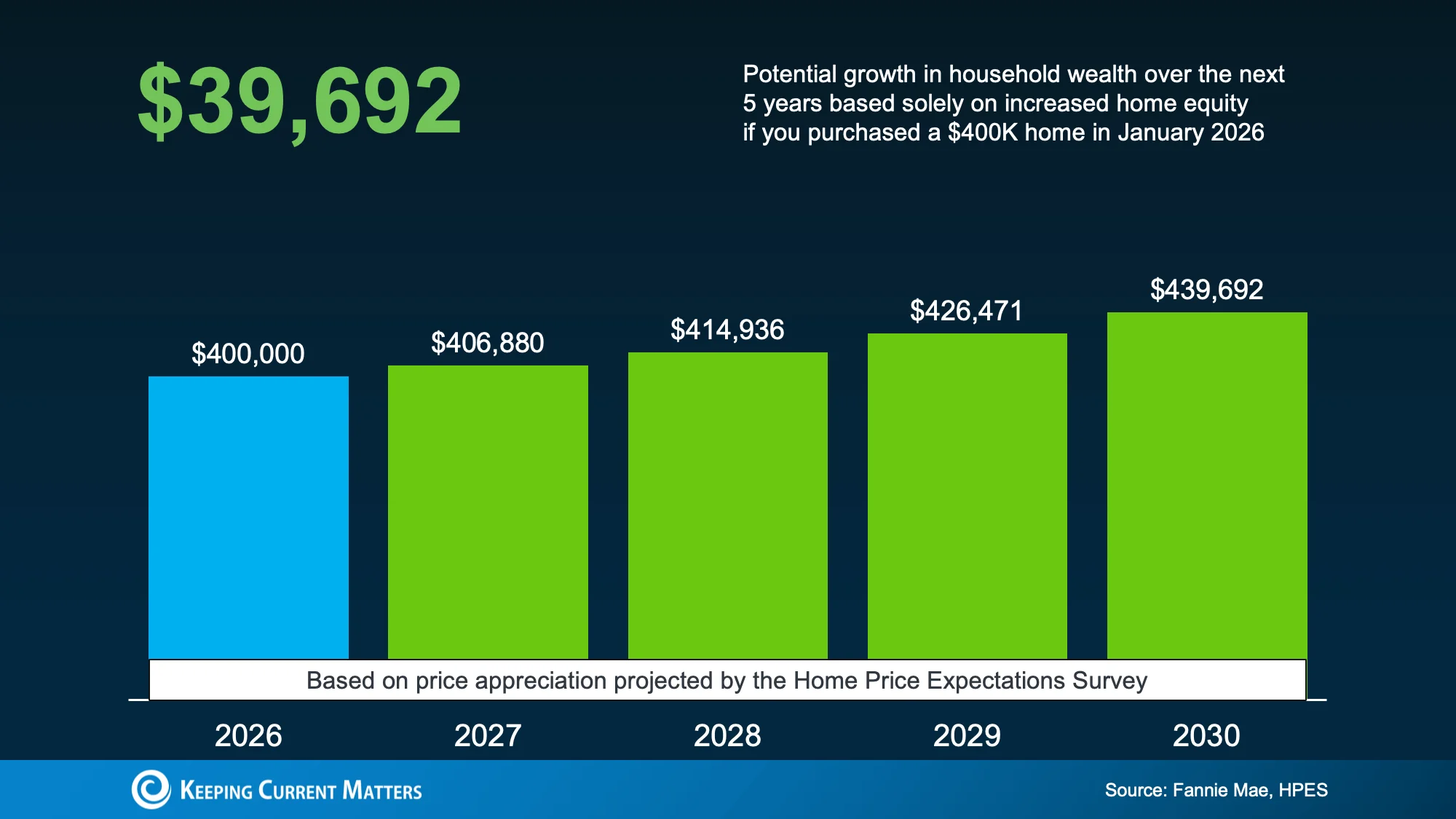
This forecast serves as a national average, and local market dynamics will ultimately influence individual outcomes. However, the broader understanding is clear: the most significant risk may not be a price crash, but rather the opportunity cost of waiting for a downturn that may never materialize. Delaying could mean missing out on gaining that $40k in equity or paying an additional $40k for the same home in five years. And this is the part most people overlook: the cost of uncertainty often outweighs the potential benefits.
The Significance of Expert Consensus
What this means for you, the buyer, is essential. In markets where conditions are continually shifting, understanding the consensus among experts can help demystify trends that might otherwise lead to paralysis by analysis. Following expert guidance isn’t an invitation to gamble; it’s a strategy to align your decisions with market realities. If you're working in this space, it may benefit you to take the collective wisdom of industry experts into account when planning your next steps.
Conclusion
Many buyers are waiting for a drop in prices, but expert opinions indicate otherwise. If you're considering your timing, consult with a local real estate professional who can provide insights into your specific market conditions and help you navigate your real estate journey. It’s better to act with informed conviction than to be caught up in speculative fears that could lead to missed opportunities in your pursuit of homeownership.