A significant segment of potential movers is contemplating postponing their plans, thinking, “I’ll just wait until later this year when the market stabilizes.” However, this approach may not be beneficial, particularly as current rate forecasts indicate minimal changes ahead. Delaying could lead to missed opportunities in a typically vibrant summer market.
The Summer Advantage for Buyers
Many buyers have expressed frustration over limited affordable housing options in recent years, and the predicament often appears cyclical: the frustration is palpable.
-
You discover a house you love, but it exceeds your budget.
-
Alternatively, you find something that’s within your budget, yet it doesn’t meet your needs.
-
Or worst of all, the market goes quiet, with no appealing listings for weeks.
Historically, summer counters this cycle. This isn’t just anecdotal; it's backed by data.
Data from previous years reveals that the summer months consistently see an uptick in sellers entering the market compared to later months. For example, the summer typically yields about 32% more fresh listings than the average months from September through December. This surge offers buyers a greater chance of finding homes that not only fit their needs but also their financial constraints. If you’re looking for variety, summer is when things pick up.
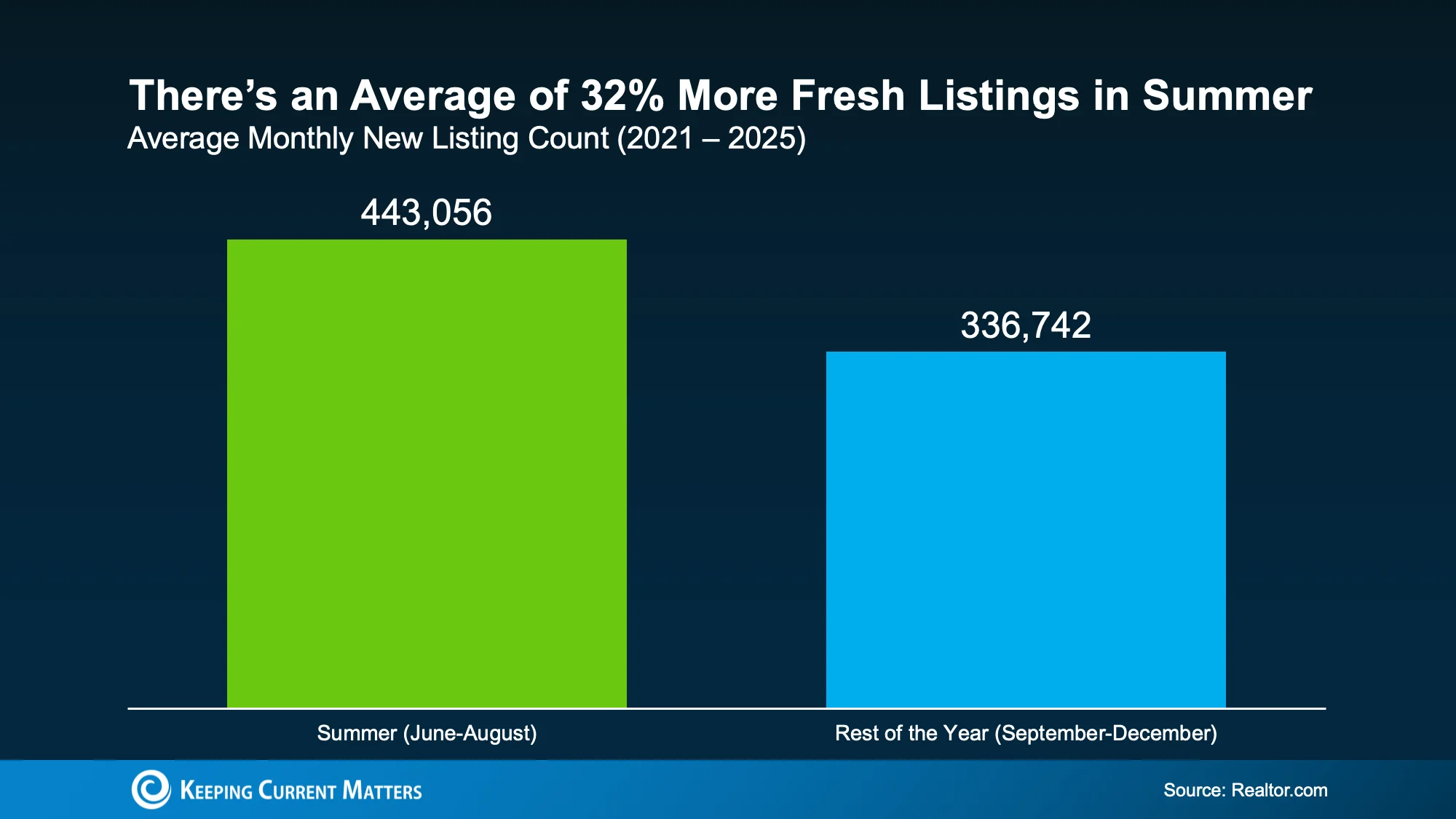
With a broader selection of newly listed homes, the possibility of finding that elusive property increases. It only takes one ideal home to make a significant impact on your search. Yet, buyers should bear in mind that this influx of listings is transient; availability tends to decrease as summer concludes. Most homeowners planning to sell typically do so before the start of the school year, leading to a tapering of new listings in the fall and winter.
If your main aim has been finding the right house at a reasonable price, then postponing until later this year may not yield additional options. In fact, the trends indicate it could limit your opportunities further. The consequence of waiting could mean you miss out on a season that historically has provided more choice.
Sellers: Timing Your Sale for Maximum Returns
On the selling side, some may hesitate due to recent headlines regarding declining prices or reductions in certain markets. It's imperative to recognize that these narratives can be misleading and do not universally apply. The context of these changes often varies greatly across different regions and markets.
Despite signs of a more balanced market and localized price drops, the summer still provides a viable opportunity for sellers. Market seasonality can still favor you this summer. It's about timing. You have to strike while the iron's hot.
According to the National Association of Realtors (NAR), homes sold during summer months typically fetch around 4% more compared to those sold from September to December. This trend underscores the season's potential if you're considering selling:
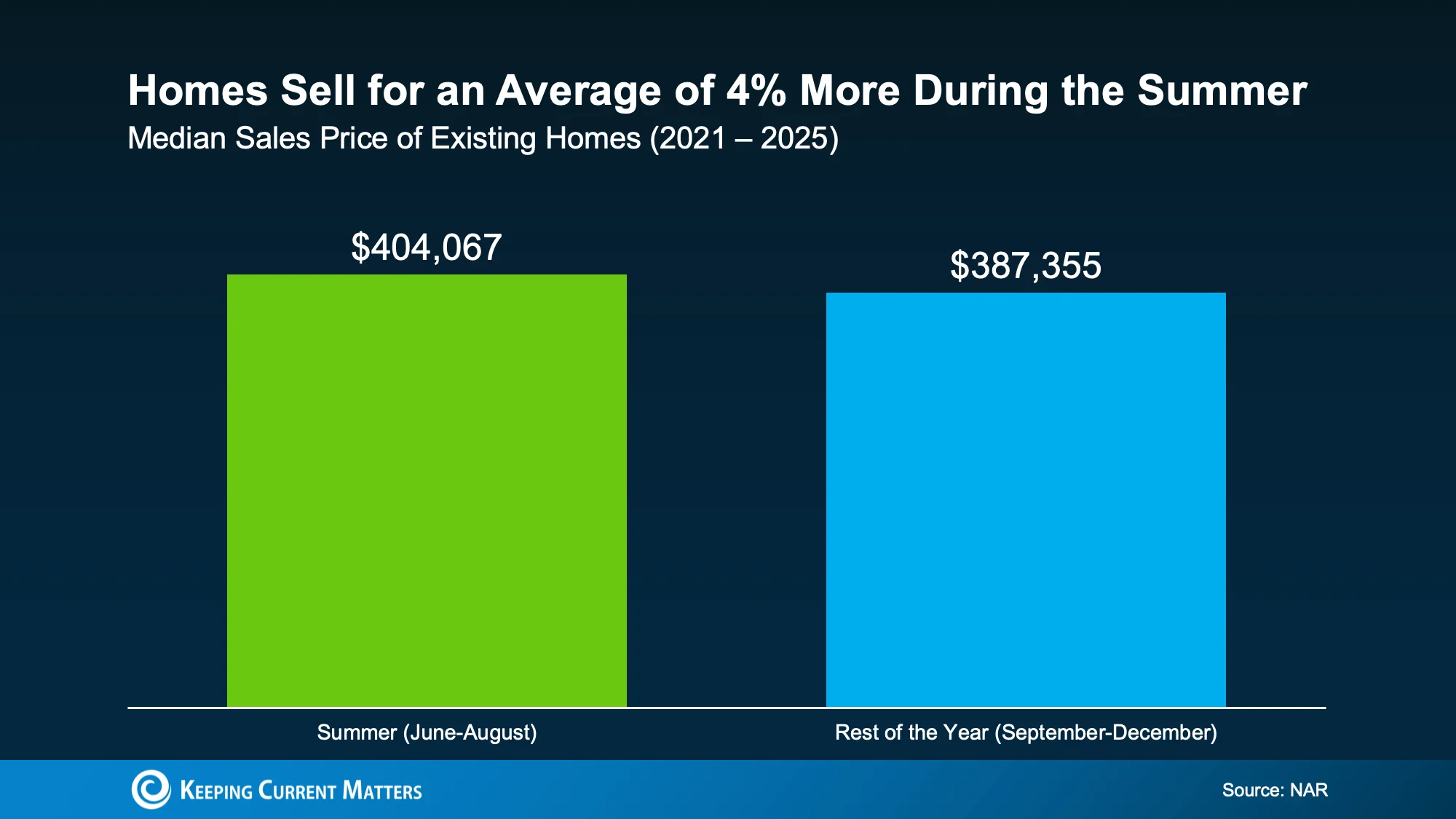
The rationale behind this is straightforward — summer buyers often have a timeline, aiming to settle before the academic year starts or during their time-off. This sense of urgency frequently results in competitive offers. They’re not just browsing; they’re looking to land the perfect spot quickly.
However, it’s crucial to approach pricing strategically; inflating your asking price by 4% might not align with market realities. Instead, recognizing that a summer listing could yield higher sale prices compared to waiting until fall might be a more prudent strategy. The market may be favorable, but demanding an unrealistic price can lead to longer listing times and eventual price reductions, which can signal desperation.
Implications for the Real Estate Market
This evolving scenario impacts everyone in the real estate market—a waiting game could have consequences. If you're working in this space, it’s vital to consider how these seasonal patterns play into your strategy. Buyers and sellers both need to assess the market dynamics seriously.
Those contemplating their next move should look beyond the immediate headlines of price drops and opt for a broader perspective. Understanding seasonal trends can clarify when to jump in. If you're a buyer, summer's influx of listings might be your best shot. And if you're a seller, this time of year generally hones in on serious buyers.
What this means for you is significant; waiting could lead to reduced chances for both finding and selling properties. Homeownership isn't just a transaction; it’s a pivotal decision, integral to one's financial future. Delaying your decision to move could potentially pay off, but it’s essential to weigh the benefits of acting now with the full context. If a transition in 2026 is on your timeline, consulting a real estate agent can clarify your priorities and whether the summer market is right for you. Given the current dynamics, summer might very well be your optimal time to move.