For many prospective homeowners, the pressing concern is affordability. With high home prices continuing to pose challenges, it’s increasingly common for buyers to seek alternatives that align better with their financial capabilities.
The Affordability Crisis
The affordability challenge in housing isn’t a new issue, but its persistence signals deeper problems in the market. High home prices are not just a reflection of demand; they represent broader economic factors including rising interest rates, economic inflation, and stagnant wages for many. The combination creates a perfect storm that pushes homeownership out of reach for countless individuals and families.
Research by PODS reveals a clear trend: approximately 61% of respondents from all generations cite affordability as the primary factor influencing their relocation decision. This statistic isn’t just a number; it underscores a significant shift in how people are thinking about where they want to live. With limited options, many individuals are expanding their searches beyond familiar neighborhoods to uncover more affordable options that were previously unconsidered. As PODS states:
“Moving is increasingly driven by affordability, connection, and quality of life. As economic pressures persist, Americans are taking a more intentional, values-driven approach to where they choose to live.”
Considering the Total Cost of Living
When we discuss affordability, we must recognize it's not solely about securing a lower home price. It's essential to evaluate the entire cost of living associated with a particular area. Most buyers tend to focus exclusively on housing costs, neglecting additional expenses related to transportation, healthcare, utilities, and even local taxes.
WalletHub has conducted an analysis to shed light on this aspect, comparing housing costs relative to median monthly household income across various states. The accompanying map illustrates the levels of affordability—lighter blue regions signify more affordable living situations, while darker areas indicate higher costs. The disparity can be striking. In some states, you might find that the average mortgage takes up an overwhelming percentage of your income, leaving little room for other vital expenditures.
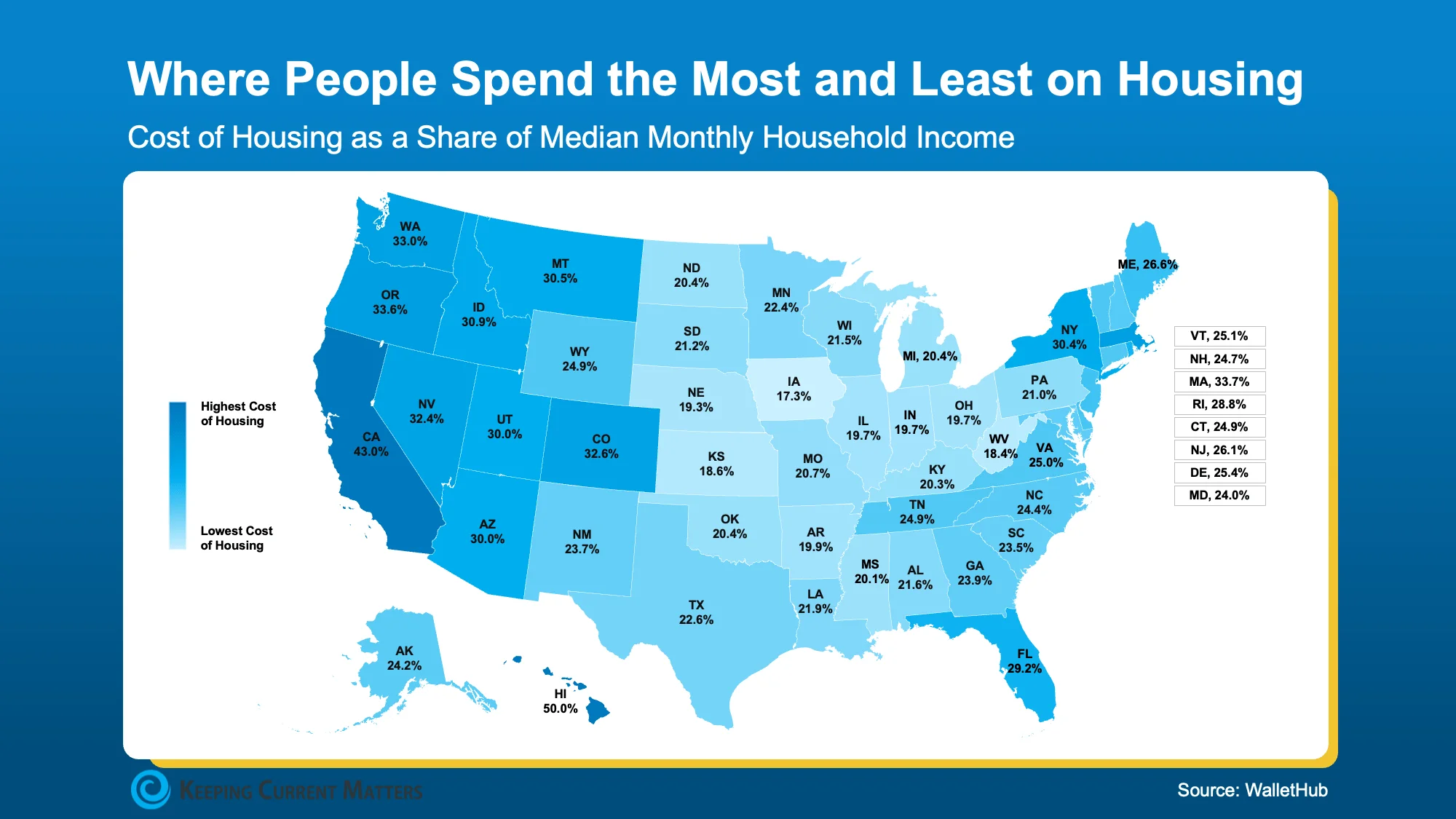
If your state falls within the dark blue category, the burden of living expenses may be restricting your financial flexibility. Exploring options in lighter-blue areas might not only lead to substantial savings but also open doors to improved educational opportunities, community resources, and enhanced quality of life. Many overlook these potential benefits in favor of familiarity, but often the most viable solutions exist just beyond familiar borders.
Local Opportunities Beyond State Lines
A common misconception among buyers is that finding more affordable housing necessitates relocation to another state or uprooting from established communities. The reality is that within every market, there are overlooked neighborhoods and towns that can provide better financial opportunities. Urban sprawl has led to the development of new, affordable housing options on the outskirts of major metropolitan areas. Investors have recognized this trend, yet many buyers remain oblivious to these up-and-coming areas.
A knowledgeable local real estate agent can pinpoint these hidden gems.
In particular, an agent familiar with neighborhood dynamics can help you discover areas that have lower average home prices but higher potential for appreciation. Especially in an era where remote work is becoming the norm, many individuals enjoy greater flexibility regarding their living situations. This newfound freedom allows buyers to consider areas that might have seemed inconvenient in a traditional commuting context but are now viable options for affordable housing. And this is the part most people overlook: a slightly longer commute may pay off with a significantly lower mortgage.
Significance of the Shift in Buyer Priorities
This growing emphasis on affordability represents more than just a shifting preference; it’s a reflection of changed priorities fueled by current economic realities. Buyers increasingly value lifestyle attributes—proximity to work, quality of education, available amenities—over traditional markers of success like home size or status. Embracing this change could reshape community development, influencing how cities allocate resources and design neighborhoods.
Moreover, this trend likely signals further competition in less-traditional markets. As more people seek affordability, desirable neighborhoods may quickly become oversaturated, leading to price increases. What this means for you as a buyer is that agility and early action could be your best strategies. Understanding market dynamics and leveraging expert advice can provide an edge in securing a better deal.
Conclusion
The quest for affordable living doesn’t have to be daunting or unmanageable. By broadening your horizons and entertaining neighborhoods that may have been outside your previous considerations, you can improve your financial situation and overall quality of life. Exploring these new areas with the support of a seasoned real estate agent could reveal just the right fit for your budget and lifestyle.
Curious about which areas currently offer the best affordability? Reach out for insights on navigating your housing options today.