Rethinking Sidewalk Sheds
New York City's sidewalk sheds have long been necessary evils—awkward structures that mar the streetscape whenever buildings undergo renovations. These flimsy, often grey, plywood enclosures are universally despised, not only by citizens but also by city workers and even contractors. The sheer inconvenience of these temporary covers has led some city officials to question their aesthetics and functionality. If you're working in urban planning or design, this debate is worth your attention.
What’s particularly compelling is the recent push by the Mamdani administration to reinvent these structures into something visually appealing. In 2024, the city enlisted the expertise of both the engineering firm Arup and architecture firm PAU to develop new designs that could dramatically overhaul the dated sidewalk shed image. Just before leaving office, Adams unveiled preliminary renderings, generating excitement about a potential transformation in urban aesthetics.
Aesthetics vs. Utility
Recently, two prototypes of these new designs appeared at Broadway and Chambers Street, adorned in bright colors like sky blue and taxi yellow. I took the opportunity to spend some time beneath these redesigned canopies, keen to observe how passersby reacted. Intriguingly, most didn't seem to notice them at all. This muted response could reflect a larger truth: New Yorkers have grown accustomed to ignoring temporary structures, or perhaps the new models, despite their vibrant hues, cleverly blend in.
Here's the thing: indifference, in this case, might actually be a good measure of success. Designing something that people can simply overlook could indicate that the structures are unobtrusive enough to fulfill their basic purpose without becoming an eyesore.
The Challenges of Implementation
The city aims for these sidewalk sheds to be not just functional but also to transition quickly from installation to removal. Achieving this will be no small feat. According to Willy Pilku, CEO of Core Scaffolding, the company tasked with fabricating and erecting the prototypes, the trial run saw notable logistical challenges simply because this was the first attempt at using the new design. It’s clear there’s a learning curve involved, as crews will need time to hone their skills to optimize the process and costs.
Ultimately, while many may see sidewalk sheds as mere nuisances, the current discussions and redesign efforts could lead to a new chapter in urban infrastructure, one where aesthetics and functionality might finally coexist.
Reimagining Safety and Design
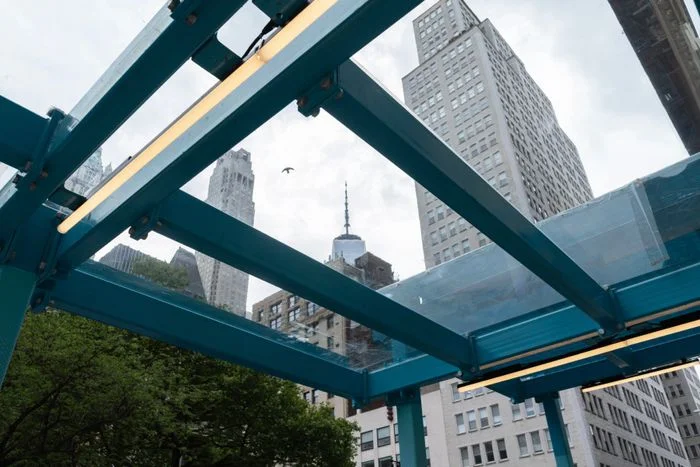
The new models of sidewalk sheds developed by Arup mark a notable shift in urban aesthetics and utility. Compared to their traditional counterparts, these prototypes are undeniably sturdier and less obtrusive, though they may not win any design awards for elegance. Standard scaffolding often appears flimsy and can sometimes lead to accidents—including structural collapses that leave passersby wary. In contrast, the Flex Shed, designed to protect pedestrians from falling debris, features robust steel poles and significant hardware that evoke a sense of safety. Even in lighter designs, like the Flex Shed (shown below), you won’t mistake it for a mere temporary structure; the thick architecture signals resilience.
Clear polycarbonate lines the top of the Flex Shed model to let light through.
Photo: Gabrielle Beaumont
Light and Transparency with Limitations
While the Rigid Shed boasts toughness, it also incorporates elements that promote a semblance of openness. Sunlight filters through its polycarbonate panels, creating a pleasant ambiance, yet it's essential to consider the full implications. Sure, these canopies shield against rain, but they also fail miserably on sweltering days, offering no reprieve from the heat. It’s hard to imagine how these clear panels will hold up once they gather grime from the urban environment. A few months in, and they could transform into eyesores—bearing the unwanted marks of city detritus. Who wants to look up and see that mess?
Bureaucratic Hurdles and Market Demand
There's a lingering question hanging over the initiative: will these new sheds become a common sight, or will they wind up as underused prototypes? Unlike traditional scaffolding that can feel like unwanted permanent fixtures, the new models should be more easily dismantled. Yet for that to happen, public interest must ramp up. The Buildings Department envisions a support structure made up of regulations and incentives that prioritize these upgraded designs over the tired old styles. Looking back to 2011, the Urban Umbrella was similarly promoted but failed to gain traction as it became a niche product—wondering if this round will fare differently is essential in gauging the real potential for change.
Shifting Regulations and Compliance Incentives
If all goes according to plan, the new designs might receive regulatory approval soon. The Department of Buildings (DoB) is ready to roll out blueprints online, aiming to streamline the adoption process for contractors. But there’s a caveat: many contractors still possess inventory stocked with outdated materials. Will they abandon their existing stocks for something perceived as more aesthetically appealing, especially when clients often resist additional costs? A focus on attractive sheds is unlikely to be welcomed by homeowners struggling to fund necessary repairs.
Moreover, the DoB is chasing more than just good will through regulatory changes. By extending the timeframe for façade inspections and introducing stricter permit renewals, the city is sending a strong message to construction firms: procrastination will no longer be tolerated. Each approved extension will require tangible progress on the job, tackling the overabundance of “perma-sheds” that clutter the streets.
More importantly, a subtle yet impactful rule change has introduced a height requirement of 12 feet for clearances, significantly improving the pedestrian experience while complicating the supply chain for scaffolding companies. While these shifts are promising, the real challenge will be in convincing stakeholders to pivot toward what the city imagines as a more functional and visually appealing streetscape. For now, the city’s approach seems more like a marketing strategy, enticing contractors to embrace new designs rather than enforcing compliance.
The Future of Sidewalk Sheds: An Opportunity for Change
Here’s the bottom line: sidewalk sheds, often viewed as an eyesore, are ripe for transformation. While they serve a crucial purpose in protecting pedestrians from construction debris, their unappealing design has long been a source of frustration for city dwellers. A movement is gaining traction around the idea of redesigning these structures to be more aesthetically pleasing and functional.
Urban beautification isn’t merely a luxury; it reflects the community's values and aspirations. If we can innovate sidewalk shed design, we could enhance public spaces and improve the overall city experience. The call for more refined and attractive solutions is more than just a nod to aesthetics; it signifies a growing expectation that construction practices should harmonize with urban life rather than disrupt it.
That said, the path to this transformation hinges on collaboration among architects, city planners, and construction firms. What remains unclear is whether there’s enough momentum behind these proposed changes to shift industry standards. The conversation has started, but it needs tangible action to create a significant impact.
For those navigating this domain, embracing the push for better sidewalk sheds could open doors to new projects and partnerships. The next wave of urban development may well hinge on how we address these practical yet unsightly necessities. If real change is to happen, it will require collective investment in design ingenuity that elevates these elements from functional to fabulously functional.
As we look ahead, the challenge lies in translating these ideas into concrete realities. In the push for smart urban design, let's aim for sidewalk sheds that not only serve a purpose but also contribute positively to the streetscapes they occupy.