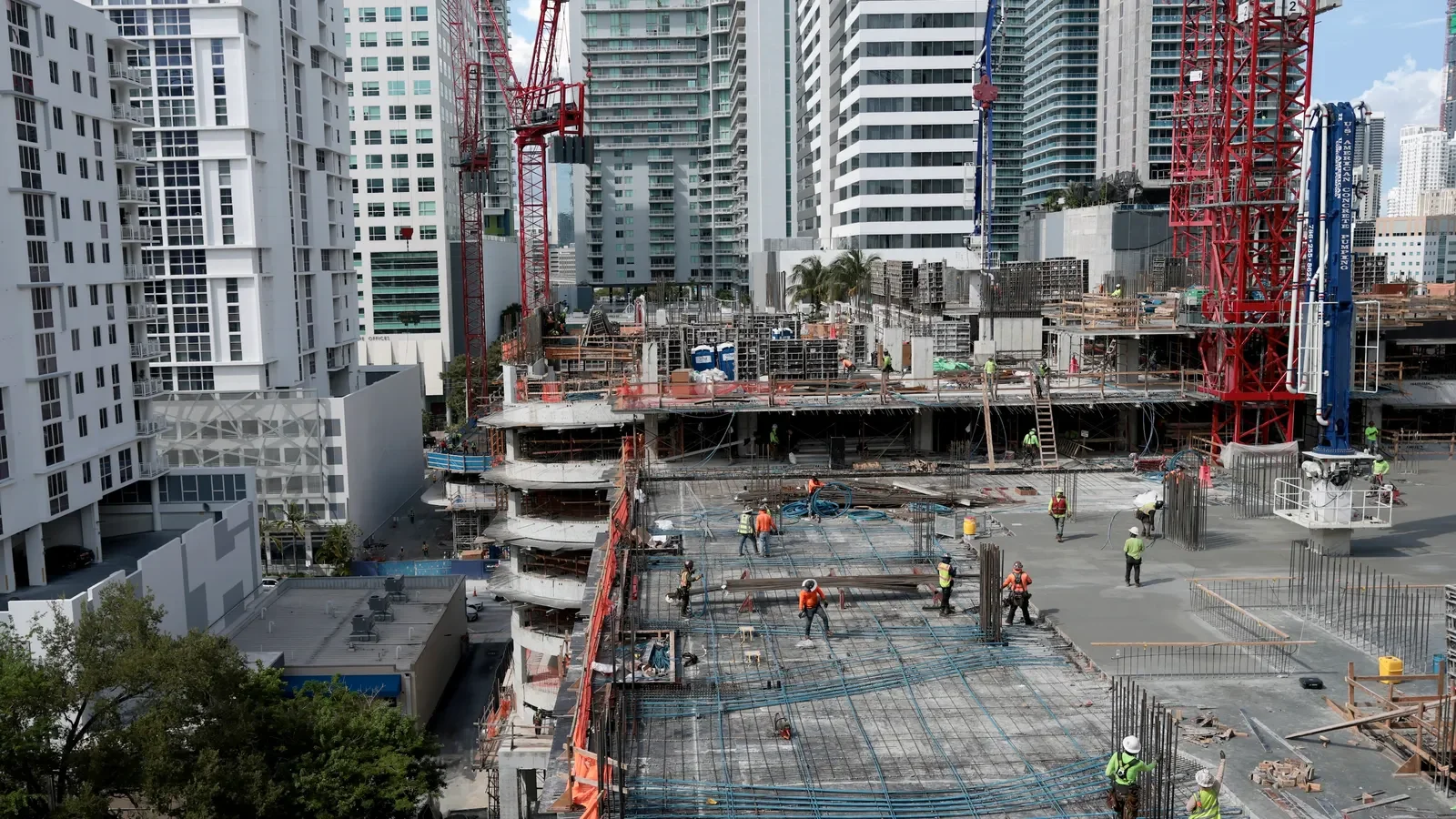
More booked work isn’t translating into greater confidence across U.S. construction. Contractors ended September with 8.7 months of backlog, the second monthly increase in a row, yet expectations for sales and margins weakened as costs climbed and activity remained concentrated in data centers. Those measures describe different parts of the market: backlog tracks work already secured, while expectations reflect what contractors think they can sell and earn in the months ahead. A fuller order book can therefore coexist with growing doubts about whether new work will arrive on favorable terms.
Associated Builders and Contractors reported that more than one in four contractors expected profit margins to decline over the next six months. That share was the highest since November 2025, while sales expectations fell to an 11-month low. The split points to a market where a fuller pipeline offers limited comfort when project economics are under pressure. Contractors can have plenty to build and still face a harder business outlook if labor, materials, or other inputs take a larger share of project revenue.
That distinction matters when reading a backlog figure in isolation. It measures the amount of work waiting to be completed, but it doesn’t show how profitable that work will be, whether costs were anticipated when bids were submitted, or how evenly projects are distributed among firms. This is more significant than it looks: rising backlog is a sign of activity, but it isn’t a reliable stand-in for rising confidence.
Costs are eroding the value of backlog
Construction input prices rose 11.2% year over year in September, the steepest annual increase in nearly four years, according to ABC. Contractors absorbed much of the increase during the period, the Associated General Contractors of America said, putting pressure on margins even as work remained available. When costs rise after a project has been priced, firms may have limited room to pass the increase along, depending on the terms and timing of that work. The reported figures don’t establish how much any one contractor lost, but they do help explain why more work hasn’t produced a stronger mood across the sector.
That cost burden helps explain why the backlog measure and contractor sentiment are moving in different directions. A project on the books doesn’t guarantee stronger returns when labor and materials become more expensive. Backlog also stretches across time: work scheduled for later can add to the total before it contributes to current revenue, while the costs of delivering it may change along the way. The number is useful, then, but incomplete on its own.
Here's the thing: contractors aren’t judging demand only by how many projects they’ve won. They’re also weighing the likely cost of completing them and the prospects for replacing finished work. If you're working in this space, that gap between secured volume and expected profitability is the detail to keep in view. A large pipeline can provide continuity, but it can’t erase pressure on margins.
Growth beyond data centers is uneven
There were signs of broader activity in September. Education and healthcare projects lifted nonresidential planning, Dodge Construction Network reported, and institutional groundbreakings improved for the month. Planning and groundbreakings offer different clues: planning can indicate interest in future projects, while a groundbreaking suggests a project has advanced into construction. Neither, by itself, shows how much work will reach contractors across the full market or how profitable that work will be.
Still, data centers and related power work continue to shape the spending picture. ABC’s analysis of Census Bureau data found data center construction spending rose 8.6% in September. Excluding data centers and closely related power projects, nonresidential spending declined. That comparison makes the concentration hard to dismiss. A strong result in one fast-growing category can lift the headline picture even when spending across the rest of nonresidential construction is weaker.
The concentration is visible in contractor backlogs, too. ABC members working on data centers reported 11.3 months of backlog, three months more than firms without that work. Yet only 15% of ABC members had data center projects under contract, leaving much of the sector’s strongest pipeline with a relatively small group of firms. The figures suggest that the benefits of the data center boom aren’t being shared evenly among contractors. They don’t tell us how those firms’ margins compare, but they do show why an industry-wide backlog average may conceal sharp differences in workload.
And this is the part most people overlook: a project category can dominate spending growth without representing the typical contractor’s experience. Firms outside data centers may see different demand, while those inside the sector may still face the same broader cost pressures. A concentrated pipeline can support headline activity and leave many businesses with a less favorable outlook at the same time.
Planning gains offer a counterpoint
Dodge’s September figures point to some demand outside the technology buildout: education and healthcare helped push planning higher, while institutional starts also improved. Those gains suggest other project types are contributing, though they haven’t yet offset the narrow base behind construction spending growth. Planning is an early signal rather than proof of a sustained construction pickup; projects still need to progress before they add meaningfully to contractors’ active work.
That said, the gains matter because they offer a possible source of breadth. If institutional planning continues to translate into starts, contractors could see more activity outside data centers and related power projects. The available figures don’t establish whether that will happen or how quickly. For now, the contrast is between improving indicators in some institutional categories and declining nonresidential spending once data center and related power work is excluded.
My read is that the next signal to watch is whether institutional planning turns into sustained starts while input costs ease. Until then, headline backlog growth may overstate how broadly contractors are benefiting from the current construction cycle. A longer backlog can keep crews busy. Better margins and a wider spread of demand would tell a stronger story.