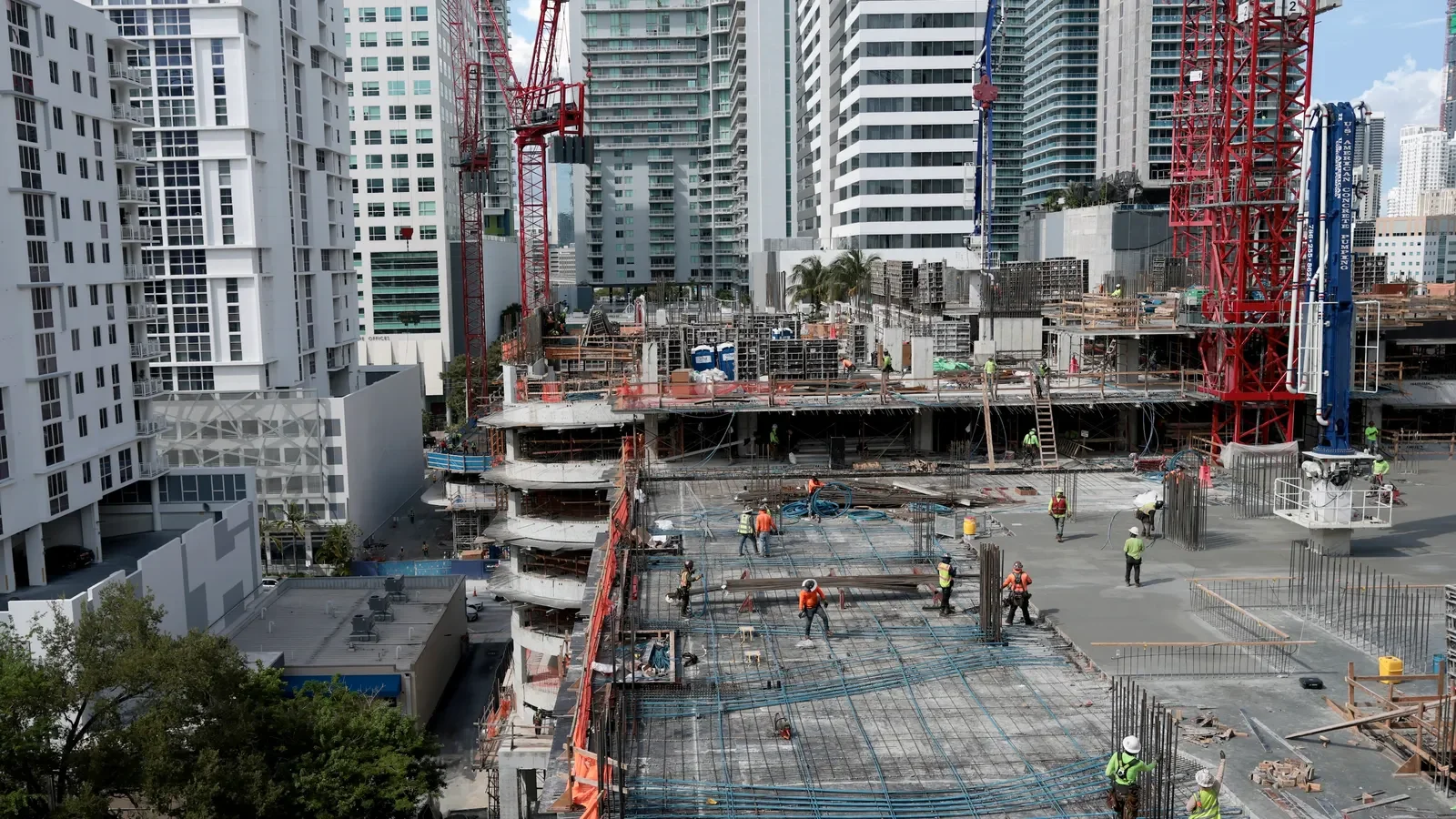
Construction crews can’t control struck-by risks by focusing only on the task in front of them. A worker handling one material may still be exposed to a vehicle turning nearby, a load moving during unloading, or something falling from above. At a Nov. 4 webinar hosted by CPWR — The Center for Construction Research and Training — safety specialists urged contractors to account for hazards across the work area, from unsecured materials overhead to equipment blind spots and loads that could shift during unloading.
The “sphere of safety” approach reflects the scale of the exposure: a worker may be struck by an object or machine outside the immediate task zone. That broad view matters because construction sites change as crews, deliveries and equipment move through shared space. A control that made sense at the start of a shift may no longer cover the risk after a route or work area changes. The stakes remain substantial. Struck-by incidents made up about 17% of construction fatalities and 21.5% of nonfatal injuries from 2011 to 2021, according to the National Institute for Occupational Safety and Health.
Secure materials across the work area
Orderly storage alone doesn’t guarantee stability. A stack can look neat and still be vulnerable to a bump, changing weather or contact with nearby work. “Just because things are neatly stacked doesn’t necessarily mean they can’t fall over,” said Travis Weber, senior director of environmental, health and safety at Haselden Construction in Centennial, Colorado. The distinction is practical: appearance is not the same as a secured load.
Weber recommended tethering tools, covering openings, installing debris netting and securing stored materials against wind. These steps address different ways materials can become hazards, including objects dropping from height and stored items shifting in changing conditions. During trailer unloading, workers should stay clear of the far side, where a shifting load could reach them. The point is to account for where the material could go if control is lost, not just where workers intend to stand. These measures align with the Associated General Contractors of Colorado’s Stop the Drop campaign.
Reese Fortin, Sundt Construction’s district health, safety and environment manager, described controls used on a Texas data center project with DPR Construction. Sundt placed portable barriers between vehicles and workers traveling to and from a lunch tent, marked pedestrian routes with fencing, and used clips to secure drywall sheets stored upright against framing. Each measure addresses a point where people or materials could move into one another’s space. The barriers and marked routes help make the intended path visible; the clips address the separate risk of stored sheets falling. Both matter.
Plan for equipment movement and changing conditions
On solar projects, Sundt uses autonomous pile drivers fitted with cameras and collision avoidance technology that can stop the equipment when someone enters its operating zone, Fortin said. Such systems can add a layer of protection, but crews still need to understand where equipment operates and how people should move around it. Fortin recommended flagging and signs around robotic work areas, with fencing added where site conditions call for it. The choice of control depends on the work area, which can change as tasks progress.
Travis Parsons, director of occupational safety and health at the Laborers’ Health and Safety Fund of North America, said an internal traffic control plan should map worker, delivery truck and equipment routes. It should identify crossing points and remove backing movements where possible. That plan gives crews a shared picture of how traffic is expected to move, while also exposing places where routes intersect. Signs can mark routes, while briefings keep subcontractors and drivers informed when the layout changes. A map that isn’t communicated or updated can quickly lose value.
Before equipment moves, operators and trained spotters should walk the route together, identify blind spots and agree on a stop signal, said Jay Hocutt, heavy equipment program manager at United Cleanup of Oak Ridge in Tennessee. That conversation helps both people understand the route and the limits of what the operator can see. Radios let spotters communicate from a safer distance. The arrangement still depends on clear communication and a shared understanding of when movement must stop.
“If communication drops or someone unexpectedly enters the work zone, stop,” Hocutt said. He recommended reviewing the need for a spotter at each briefing and whenever conditions shift. A spotter may be useful for one movement and unnecessary for another; the decision needs to reflect the task and the site at that moment. At his company, workers who halt a job can receive a recognition coin. “We actually celebrate when somebody stops work because that’s what we want them to do,” he said. That’s a meaningful signal about how a safety rule is meant to work in practice.
Why the safety boundary needs regular review
For contractors, the practical test is whether protections still match the site as people, materials and equipment move. Regular briefings and clear stop-work rules help keep that safety boundary current. If you’re working in this space, the useful question is whether crews can identify the hazards around their task and know what to do when the conditions change. A plan on paper can’t answer that for them.
This is more significant than it looks: the controls described at the webinar depend on ordinary decisions made repeatedly, from where workers walk to whether a load is secured before unloading. (And this is the part most people overlook.) Safety can turn on whether someone feels able to pause work when the route, visibility or communication no longer matches the plan. That pause. It’s a small action with a direct purpose.
There’s no single control that covers every struck-by exposure described by the speakers. Barriers, signs, secure storage, traffic planning, spotters and communication each address different conditions. The broader lesson is to keep checking whether those protections still fit the work underway. A changing site calls for a changing conversation.