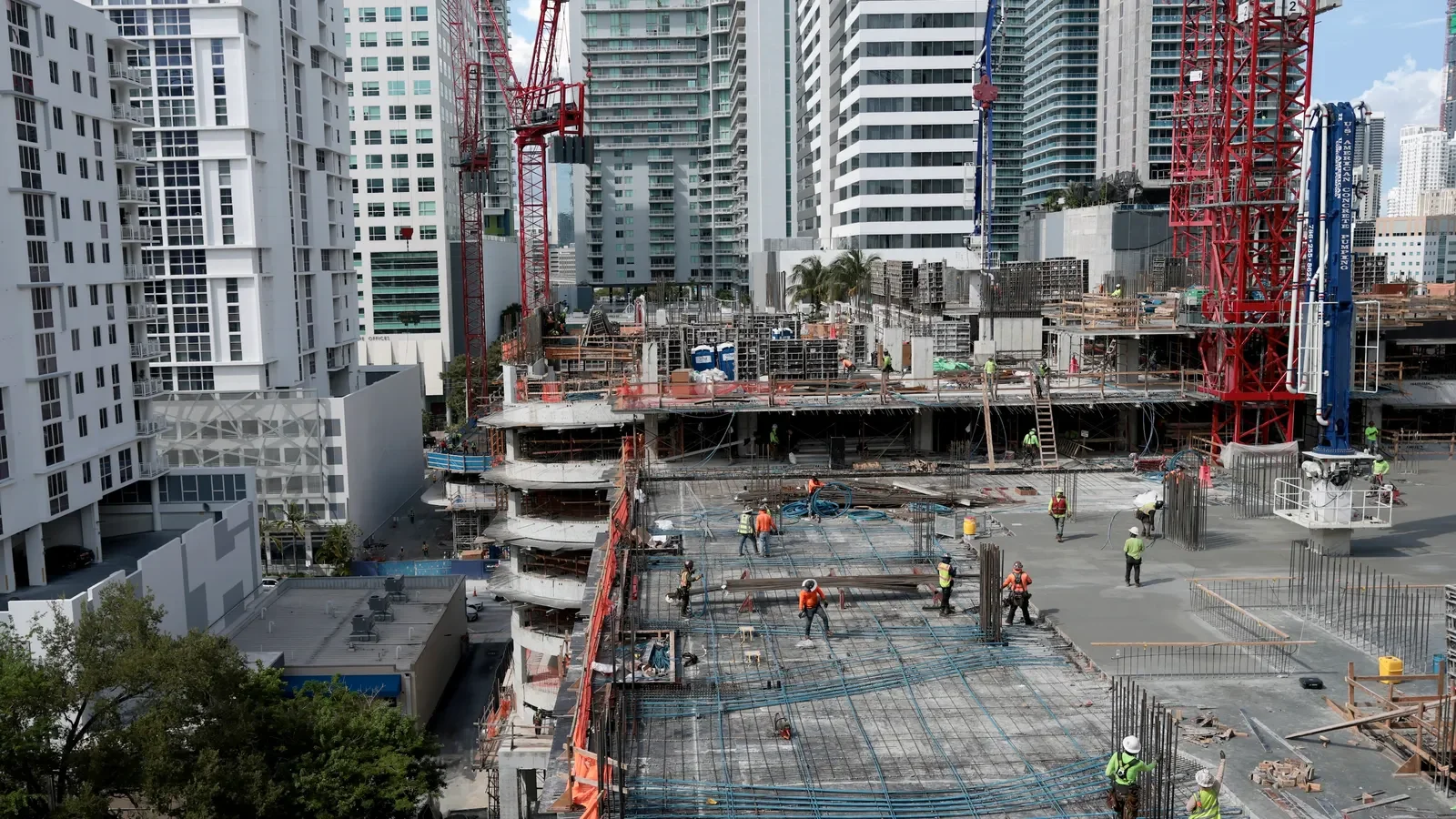
Fluor’s record backlog and a pipeline of 25 potential megaprojects point to a substantial construction workload ahead. The Irving, Texas-based contractor says those prospective projects average $4.5 billion each, though client approvals and financing remain the main hurdles before they become contracts. That average describes the opportunities under consideration; it doesn’t mean Fluor has secured that value in work. The distinction matters for a contractor whose future activity depends on customers turning plans into funded projects.
A broad pipeline, with client decisions still pending
On its Nov. 6 earnings call, CEO Jim Breuer described opportunities across gas-fired power, copper, data centers, life sciences and advanced manufacturing. Fluor already has front-end work or sole-source discussions on most of the prospects, he said, making many of them negotiated pursuits. That work can give a contractor an earlier role in shaping a project, but it doesn’t remove the client’s obligation to approve the scope and find a way to pay for it. A long list of prospects, then, says something about market interest; it says less about the timing of signed contracts.
“The biggest hurdle to win the work is whether the project gets approved by the clients’ board and it overcomes its financial hurdles,” Breuer said. That distinction matters: the pipeline is sizeable, but awards depend on customers clearing internal and financial decisions. Boards may weigh project costs, business priorities and financing before committing to construction, so even a negotiated pursuit can stall or change shape. Fluor’s description of the pipeline is a measure of opportunity, not a schedule of guaranteed starts.

One near-term pursuit is a gas-fueled power facility: Fluor is finalizing an engineering, procurement and construction contract for the first project in what could become a series. Breuer has described energy work as a way for the contractor to serve demand linked to data center growth. The proposed connection is straightforward: data centers need power, and gas-fired generation is one option developers may consider. But a first contract would still need to be completed before a possible series could be treated as repeat business. Potential demand can support a project case; it doesn’t settle the customer’s approval or financing questions.
Fluor has also begun early construction work on three data center buildings in Hawesville, Kentucky, for developer TeraWulf. That activity gives the company work tied to data center construction already underway, while the broader pipeline points to additional prospects at different stages. The two should be read separately: early work on named buildings is a concrete project update, while the 25 opportunities remain prospective. If you’re working in this space, that difference is central to judging how much of the reported demand could become near-term workload.
Record awards lift backlog
Fluor posted $10.9 billion in new awards during the third quarter of 2026, including $7.5 billion for LNG Canada Phase 2. Backlog rose 21% year over year to $34.3 billion, its highest level this decade. The company also reported record new awards for the quarter. The LNG Canada award accounts for a substantial portion of the quarter’s total, so the headline figure reflects a major project as well as a wider set of work. Backlog gives a view of contracted activity, though it doesn’t by itself show the pace at which every project will generate revenue or earnings.
Third-quarter profit was $158 million, compared with a loss of $697 million in the same period a year earlier. Revenue climbed 10% year over year, from $3.37 billion to $3.72 billion. Those results point to a sharp improvement from the prior-year quarter, but a single comparison doesn’t explain how earnings will develop as the new awards progress. Construction work typically moves through phases, and the timing of activity can affect when revenue and profit are recorded. The quarter’s performance is encouraging; the next question is whether project execution sustains it.
Recent awards are expected to start contributing to earnings next year, CFO John Regan said, with project activity forecast to peak in 2028 as work moves into full execution. Regan said the core business remained healthy, citing the awards, portfolio simplification and progress completing legacy projects. That outlook gives investors and industry observers a rough sequence: awards first, then a build-up in execution activity. The forecast still depends on projects advancing as expected, and Fluor’s own account of customer approvals makes clear that not every possible job is at the same stage. A projected peak is a planning view, not a guarantee that each project will follow the same timetable.
Analyst Andrew Wittmann of Baird said the record awards were largely anticipated. He pointed to LNG Canada Phase 2 as the largest award, with Chilean copper projects and the Savannah River extension adding to the mix. His comment puts the quarter’s result in context: a record can be meaningful without surprising the market if expectations were already high. The composition matters too, since the named awards span different types of work. That variety may broaden Fluor’s activity, while the company’s results will still depend on how individual jobs are executed.
What the workload signals
For Fluor, the near-term measure will be how quickly its large negotiated pipeline clears customer approval and financing hurdles. Its backlog already provides a strong base, while the prospective awards could extend that workload across several sectors. This is more significant than it looks: the company is describing both a substantial volume of contracted work and a separate pool of large opportunities that could replenish activity later. Yet the two figures answer different questions, and combining them would overstate what has been secured.
Here’s the thing: a record backlog is useful evidence of work in hand, but the pipeline is where uncertainty remains. The average project size suggests the opportunities are individually consequential, while the breadth of sectors offers several possible sources of future work. And yet, the decisive events sit with clients: board approval, financing and a final contract. Those gates can affect whether a prospect advances and when construction begins (and this is the part most people overlook). For now, Fluor has a sizable base and a set of potential additions. The next evidence will come from awards and execution. Quite a queue.