The Kansas City Chiefs have picked a construction team for their new 70,000-seat stadium in Wyandotte County, and the choice says plenty about where the franchise is heading. The award is the latest step in the team's move away from Arrowhead Stadium, its longtime home. Here's the thing: construction contracts are rarely the headline in a stadium deal, but they're often where the real commitments get locked in. Leaving a building a franchise has occupied for decades is a long process, and each step narrows the options for what comes next.
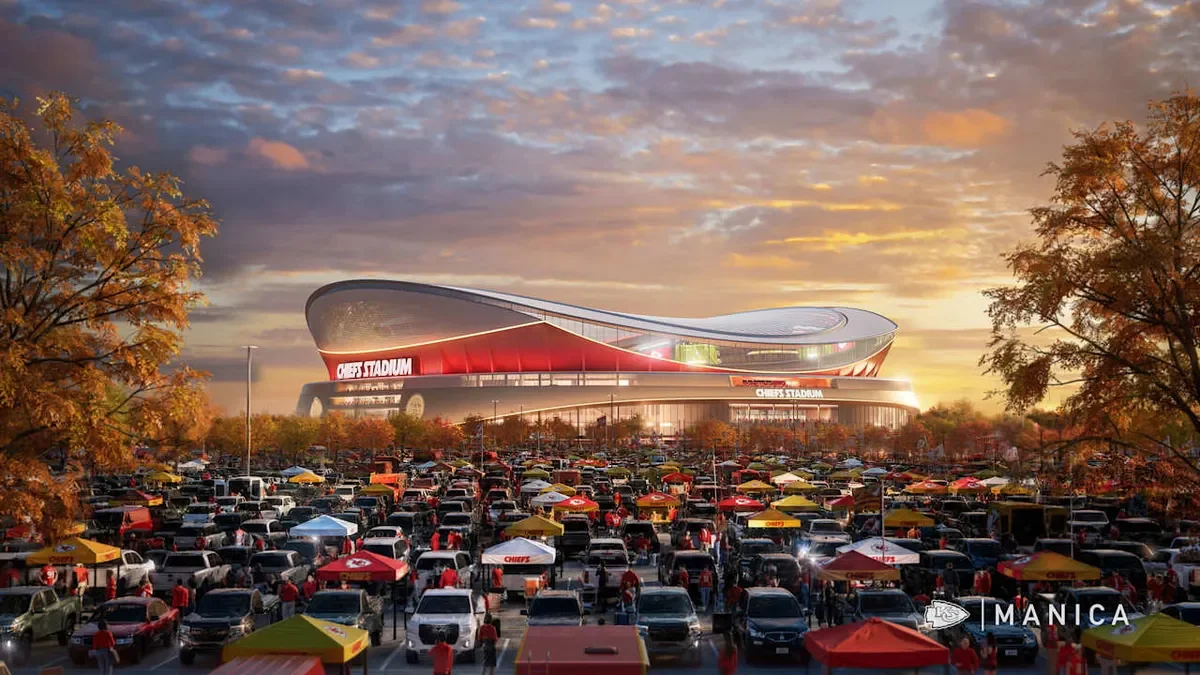
A joint venture of Clark Construction and AECOM landed the job. Site work starts in 2027, and the venue is slated to open in 2031. That's roughly four years from the first earthwork to opening day, which is tight for a project of this scale. Joint ventures like this one are a common way to pool capacity and share risk, but the split of responsibilities between partners is usually where friction shows up.
The early phase is where schedules get won or lost
Before any steel goes up, the JV will weigh in on construction improvements, including recommendations on material availability and procurement. The team will work with key stakeholders to turn the initial design into a permitted and budgeted project. That's the stage where cost and schedule either hold together or start slipping, so it matters more than it sounds. Material availability rarely makes headlines, yet a delayed shipment of specialty components can ripple through an entire build sequence. Stadium projects of this type are typically designed in phases, and early contractor input exists largely to catch these problems before they turn into expensive change orders.
Clark and AECOM will also set the strategy and schedule for competitive bidding and identify qualified subcontractors and suppliers. My read is that procurement decisions made now will drive the 2031 date more than anything that happens on site in 2027. If you're working in construction or supply, this is the window when relationships form and bid packages take shape, and it's easy to miss if you're waiting for public milestones. That said, a schedule is only as good as the bids that come back. An aggressive bidding timeline can produce tight pricing, or it can produce thin margins that show up later as disputes.
Design and the state agreement
Manica and HNTB will handle the design, covering the seating bowl, premium spaces, back-of-house operations and site infrastructure. The Chiefs reached an agreement with the state of Kansas to build the venue in December, according to an announcement from Gov. Laura Kelly. Design and the state deal are more connected than the headlines suggest. A stadium's footprint, parking and utility connections usually depend on the public arrangements that set the site. Back-of-house operations get less attention than seating, but kitchens, loading docks and staff areas are where many game-day headaches begin.
"NFL stadium projects present some of the most complex challenges in our industry, and that's where our team thrives," said Ken Johnson, executive vice president and sports market leader at AECOM Hunt.
Johnson's comment is the kind of line you'd expect from a contractor pitching for work, and I'd read it that way. Still, the underlying point holds up. Stadiums combine tight deadlines, public scrutiny and highly specialized spaces in one building, and those are the conditions where a firm's track record matters more than its marketing copy. The linked state document is labeled as a draft press release, so treat its wording as the state's framing rather than a full list of terms.
The stadium is the anchor, not the whole story
The stadium is the centerpiece of a $4.5 billion capital investment project in Kansas. That total includes a separate $300 million practice facility in Olathe and $1.2 billion in private ancillary real estate developments. The Chiefs tapped Kansas City-based Burns & McDonnell in July to oversee the practice facility from early planning through construction. Do the arithmetic and you land near $3 billion for the stadium itself, which lines up with the rendering caption.
And yet the $1.2 billion in adjacent real estate may end up mattering most to the local market. That's where the commercial and residential spillover will show up, and it's the piece to watch as the stadium takes shape. Stadium districts tend to succeed or stall based on what gets built around them, and private developers move on their own timelines. (and this is the part most people overlook) the public-facing headline number is only part of the lever. Private development determines whether the area feels active on the 300 days a year there isn't a game.
Where this fits in Clark and AECOM's portfolios
The win adds to Clark's NFL stadium work, which includes the Washington Commanders' $3.8 billion stadium in Washington, D.C. AECOM, for its part, broke ground earlier this year on the Cleveland Browns' new $2.4 billion stadium in Brook Park, Ohio. Those projects show how these firms build their track records. Repeat work on the largest venues is a strong signal to other owners, and it's a reminder that a single stadium rarely defines a firm.
Two stadium megaprojects now sit on AECOM's board, and Clark has the Commanders. Put simply, the Chiefs job gives each firm another NFL megaproject on its books. That said, holding a slot on a megaproject isn't the same as controlling how it turns out. Watch whether Wyandotte County's adjacent development follows the same pattern of private investment that's surrounding the Chiefs' broader plan.
What this means if you're watching the market
Stadium deals rarely end at the ribbon cutting, and that's the part I'd keep an eye on. The next few years will show whether cost and schedule hold, whether the bidding process draws a wide field of subcontractors, and whether surrounding real estate follows the stadium rather than waiting for it. Those are the questions that separate a project that delivers on its promises from one that merely announces them.
If you're working in construction, supply or commercial real estate around Wyandotte County, the useful signals are the bid packages, the design milestones and the pace of private development announcements, not the headline budget. Those documents tell you whether the plan is actually moving. Nothing here guarantees a particular outcome, and large projects of this kind typically run into delays that early announcements don't mention.
Here's the thing: the stadium will be the photograph, but the neighborhood around it will be the story. Whether that story gets written by 2031 or later depends on decisions being made now, mostly out of public view. Not a dramatic conclusion, but a useful one.