Investor participation in the housing sector remains stable, but recent data reveals a marked increase in activity from smaller, individual investors. According to a report from Realtor.com®, the share of home sales attributed to investors rose to 11.3% in 2025, a slight uptick of 0.3 percentage points from the previous year. This shows a small but significant shift in the investor profile, suggesting that more individuals are seeing real estate as a viable investment opportunity in an unpredictable economy.
Investors acquired approximately 534,000 homes, with the median purchase price increasing by 5.6%. This growth outpaced the overall rise in home sale prices, indicating a narrowing gap between investor purchases and those made by typical homebuyers. It raises questions about the accessibility of housing for the average person, as increased investor interest often correlates with heightened competition for limited supplies.
Mom-and-pop investors continue to dominate the market, accounting for about two-thirds of the total volume of housing purchased. In contrast, large institutional investors have seen their presence significantly diminish, with these entities down nearly 70% since 2021. This shift might signal a transformation in investor strategy, as larger firms reassess their place in the market. Notably, “mega” investors, defined as those possessing 350 or more properties, have modestly declined by about 30% during the same time frame. This is more significant than it looks, as it suggests that the big players are either retreating or repositioning themselves in response to changing economic factors.
Market Changes Following the Pandemic
The investor dynamic has undergone substantial evolution since the COVID-19 pandemic, according to Realtor.com senior economist Hannah Jones. Historically, buyers contended with investors for limited housing inventory, creating a highly competitive scenario. However, this dynamic has shifted. “Inventory levels in many regions have bounced back to, or exceeded, pre-pandemic norms,” states Jones. She notes that investor activity remained steady in terms of both the number of purchases and overall market share, countering a trend that had characterized the previous few years.
As the pandemic wanes, housing inventory across the nation has seen more balance. This newfound stability enables first-time buyers to compete without the overwhelming pressure they previously experienced from institutional bids. If you're working in this space, you might find it worth keeping an eye on local economic recovery indicators. They often directly impact housing opportunities and resources available to smaller investors.
Investor Purchase Trends by Region
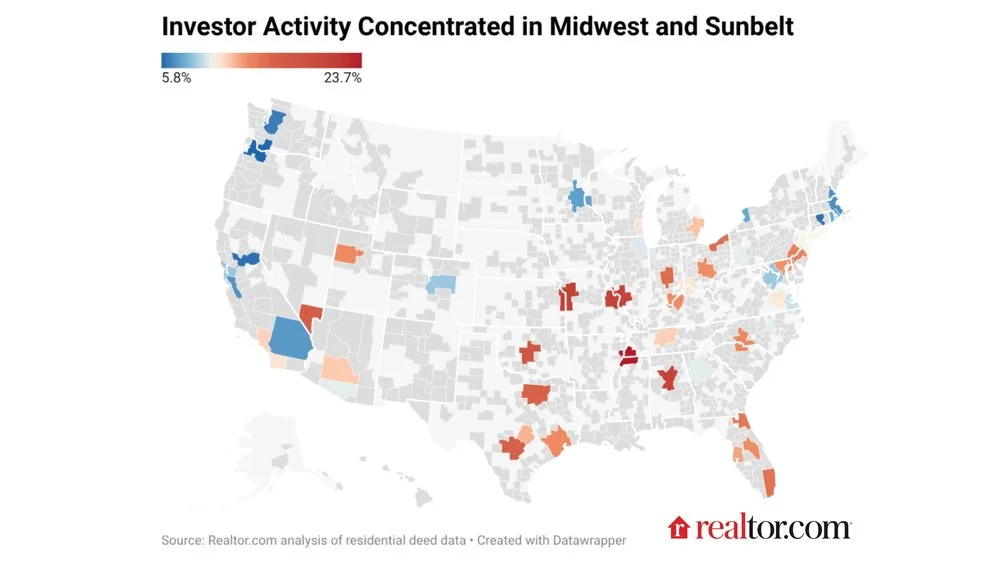
Data suggests that the Midwest and Sun Belt regions are particularly appealing for real estate investors. The Midwest, with its affordability, and the Sun Belt, experiencing ongoing population growth, attract significant interest from buyers. For example, Memphis, TN, has emerged as a leader in investor engagement, with 23.7% of market activity tied to investors. Kansas City, MO, and St. Louis follow closely behind, attracting investor purchases of 21.2% and 21.1%, respectively. These cities showcase a broader trend of individual investors seeking markets that promise strong returns on investment.
In contrast, Atlanta has seen a shift where investors have turned into net sellers, offloading approximately 1,800 units—the largest sale volume in any metro area. This reversal offers a glimpse into the region's changing fortunes and signals that investors are adjusting their strategies based on local market conditions. (And this is the part most people overlook.) The very markets that once seemed promising can quickly shift, emphasizing the importance of real-time analysis.
Lincoln Palmer, COO at American Homes 4 Rent, indicated in a May earnings call that the Midwest market shows strong potential for continued performance, outpacing other regions. Factors like rate growth and migration drive demand here, shaping the investment landscape. It's a delicate balance, as investors weigh potential profits against inherent risks, particularly in a market that has seen varying demand based on external economic conditions.
Market analytics firm ATTOM reported an uptick in profits from home flipping this year, a trend not seen since the Great Recession. This financial incentive likely draws investors toward older and distressed properties. The appeal lies primarily in the opportunity to acquire undervalued homes before invigorating them for resale at higher prices. The dynamic could shift once again if those properties flood supply, leading to potential downturns.
The Future of Institutional Investors
The recent housing bill, paired with ongoing scrutiny of large-scale investors, is altering market dynamics. Yet, the decline in activity among institutional investors has been gradual, beginning several years ago, rather than a sudden shift. An analysis reveals that while legislative changes may curb investor competitiveness, they also highlight the growing influence of individual investors.
Jones describes the existing market conditions as “the new baseline.” While the exit of mega-investors reduces one source of market fluctuations, it also diminishes the likelihood of large-scale investor exodus. The landscape is increasingly defined by the presence of small investors, particularly in affordable markets within the Midwest and Sun Belt, where their competition with first-time buyers is most pronounced. This reinforces a trend toward more localized investment strategies and opportunistic buying.
Jeff Holzmann, COO of RREAF Holdings, expressed optimism that the legislation would alleviate competition and help stabilize pricing for homebuyers in the future. He emphasizes that homes owned by institutional investors turn into commodities driven by profit motives, directly affecting rent prices. This situation invites further examination of how housing affordability is impacted as we move forward, forcing both buyers and policymakers to confront pressing questions about the future of homeownership in America.
Implications and Future Outlook
The shift toward smaller individual investors reshapes not only how real estate transactions occur but poses critical questions about the long-term viability of the market. As larger institutional players pull back, these emerging investors may bring balance but also heightened competition within this space. If you're in this industry, keeping an eye on emerging trends is essential, as they could signify larger market shifts.
The future of the housing market will likely hinge on the interaction between these investors and traditional homebuyers. Will affordable housing become less accessible if smaller players gain too much traction? Or could their presence lead to healthier competition and stabilized markets? These questions remain conjectural as both buyers and investors navigate a complex and ever-fluctuating market, with current legislative efforts likely influencing upcoming trends.