HIC Land is positioning larger master-planned communities at the center of its next growth phase, widening its focus beyond residential lot development to include multifamily and commercial projects. The South Carolina-based firm has named Victor Padilla co-CEO alongside founder Stefan Hoyer as it pursues that shift. The appointment reflects work Padilla already handles inside the company, while the broader strategy asks HIC to take on projects that require more coordination and a longer commitment to each site.
Padilla, Hoyer’s first hire, has spent more than a decade at HIC Land and most recently served as director of operations. His responsibilities have grown to cover acquisitions, dispositions, financing, personnel management and strategic growth; he already leads much of the firm’s daily work. Hoyer, who founded the company in 2008, will continue working with homebuilders, landowners, investors and other partners. The arrangement gives HIC continuity in its external relationships while elevating an executive who has been involved in the firm’s operations over many years.

“We’ll certainly continue working with our builder partners on smaller projects, but our long-term strategy is increasingly focused on larger master-planned communities,” Padilla told Multifamily Dive. He said the firm intends to grow its multifamily and commercial businesses as part of that strategy. The shift doesn’t mean HIC is leaving its existing builder relationships behind; it signals an effort to add more uses and stages of development around its core business of preparing land for home construction.
More land, longer timelines
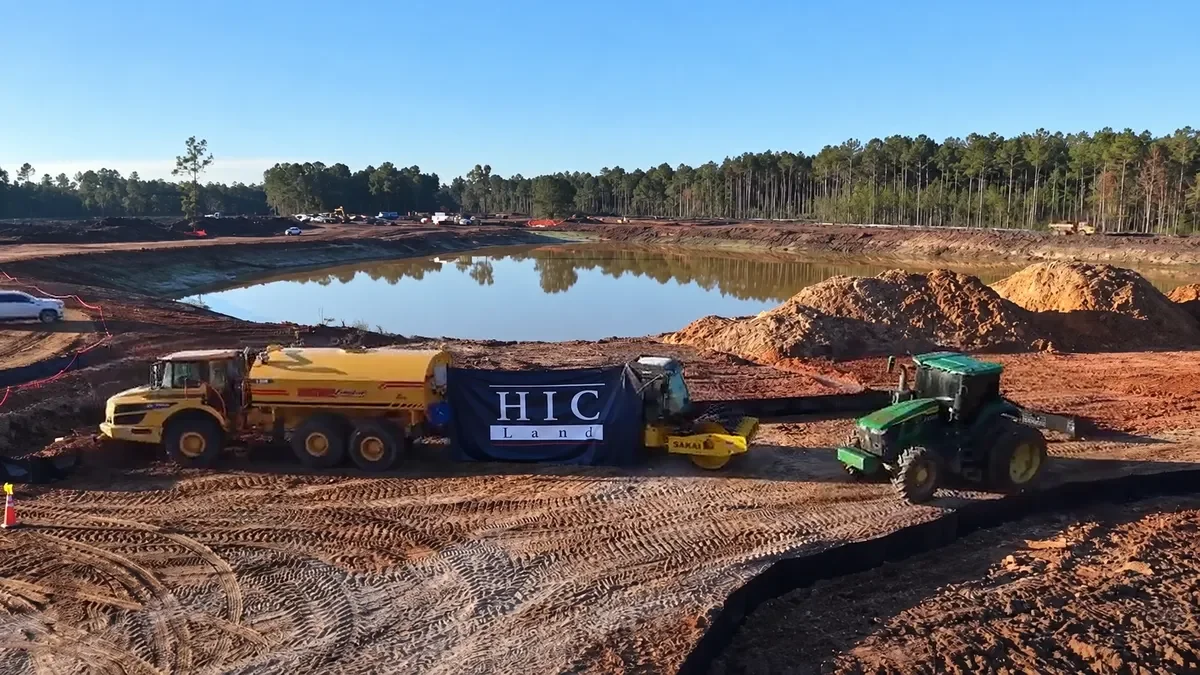
HIC’s established model is to acquire land that is entitled and permitted, install infrastructure, then sell prepared sites to homebuilders. The firm’s work is concentrated in the Southeast, though it operates in eight states. It reports more than $300 million in total investments and over 48,000 lots under development, owned or controlled. In this model, the company takes on the work of preparing sites so builders can focus on constructing homes, but the transition to larger communities extends HIC’s role beyond that handoff.
The company also owns or controls parcels representing more than 7,500 multifamily units and more than 700 acres of commercial property. HIC intends to develop those assets as part of its future plans, according to the company’s release. Those holdings give the firm a potential base for adding housing types and commercial uses within its projects, though ownership or control alone doesn’t establish when a parcel will be developed or what form a finished project will take.
Padilla said the firm has increasingly seen value in communities that bring housing together with retail, recreation and municipal infrastructure. Such projects demand more time, capital and resources, he said, but can establish a larger pipeline of homesites in one place. That scale gives HIC room to deliver lots on builders’ schedules while maintaining greater influence over a community’s overall design. The tradeoff is a more involved process: infrastructure and multiple land uses need to be coordinated across a larger footprint, and the firm’s own description makes clear that these projects require a longer horizon.
This is more significant than it looks. A company accustomed to selling prepared lots is describing a broader role in shaping how a community takes form, with more of its own capital and operational attention tied to the result. The promise is continuity across uses; the test will be whether the company can manage that added scope while continuing to serve builders’ needs.
Padilla joined HIC after working as an audit senior at Deloitte, where he advised clients in real estate, manufacturing, government, retail and commodities. That experience spans sectors, but his current remit is firmly focused on HIC’s land and development operations. His elevation is therefore both a leadership decision and a sign that the company sees its existing operational structure as capable of supporting a wider project mix.
Multifamily tied to community demand
HIC plans to use its residential lot development program to track population growth, absorption and market demand when deciding when to pursue multifamily construction within its larger communities. That approach ties apartment timing to the same local signals the company observes through its lot business, rather than treating multifamily as a separate expansion detached from its land pipeline. The plan describes a decision framework, though it doesn’t specify thresholds or timing for particular projects.
Hoyer said the company expects to work with third-party firms on building and property management while retaining long-term ownership of completed properties. That division would let HIC keep ownership exposure while relying on outside firms for specialized operating work. It also means the company’s ambitions extend beyond preparing land for sale: retaining completed properties creates a continuing role after construction, with the performance of those assets tied to demand in the communities where they sit.
HIC is privately funded by Hoyer and has no outside investors, Padilla said. He described that structure as allowing the firm to adjust to market conditions and builder needs, and to consider different purchase arrangements with landowners. That flexibility may help the company shape deals around specific sites, but it doesn’t remove the basic demands Padilla identified: larger projects take more time, capital and resources. (And this is the part most people overlook.) A wider development scope can change what the company must manage long after land is acquired.
If you’re working in this space, the distinction to watch is whether HIC’s multifamily plans follow demonstrated community demand or simply add another use to the development mix. The company says it intends to use population growth, absorption and market demand to guide timing, but has not described specific projects or schedules here. That said, the stated approach links the new business to information generated by its existing lot program. A useful signal, but not a guarantee of execution.
What the shift could mean for HIC
The leadership change formalizes Padilla’s operational role as HIC expands its development ambitions. The firm’s stated direction points to a broader community-building model, with multifamily and commercial uses planned alongside the housing and infrastructure that anchor its land pipeline. How quickly that model takes shape will depend on project timing, available resources and the demand HIC identifies in its markets.
For now, the company is describing a change in scope, not a list of newly announced developments. Its existing lot business remains part of the strategy, while larger communities offer a way to connect that work with commercial property and potential multifamily construction. The practical measure of progress will be whether those pieces advance together and support the builder relationships HIC says it intends to maintain.