When a sale turns into a rental
Roughly 9% of homes currently offered for rent had first been listed for sale, according to Parcl. That share points to a growing fallback for some sellers facing longer marketing times or buyer resistance to their asking price. It doesn’t mean selling has stopped working; pricing, preparation and local demand still shape the outcome. The figure describes a path from sale listing to rental listing, though it doesn’t explain why each owner changed course or how long those homes had been for sale.
That distinction matters. A home can move to the rental market because its owner wants to wait, because a sale hasn’t attracted an acceptable offer, or because the owner’s plans have changed. Those situations can look similar in listing data but reflect different choices. The share is a useful signal of seller behavior, not proof that renting is financially preferable or that the local sales market has stalled.
Accidental landlords vary by market
Some owners expected a quicker sale or a price buyers weren’t willing to meet. When the process didn’t match those expectations, they chose to rent while they reconsidered their next move. The switch can buy time, but it also changes the owner’s role: instead of preparing a property for sale and handing it to a buyer, they take on the ongoing work of housing tenants. That’s a meaningful shift, even when it starts as a temporary decision.
Zillow Senior Economist Kara Ng describes the pressure behind that choice:
“Bargaining power is tilting toward buyers and homes are taking longer to sell, making renting out a property one way to buy time rather than compete aggressively on price.”
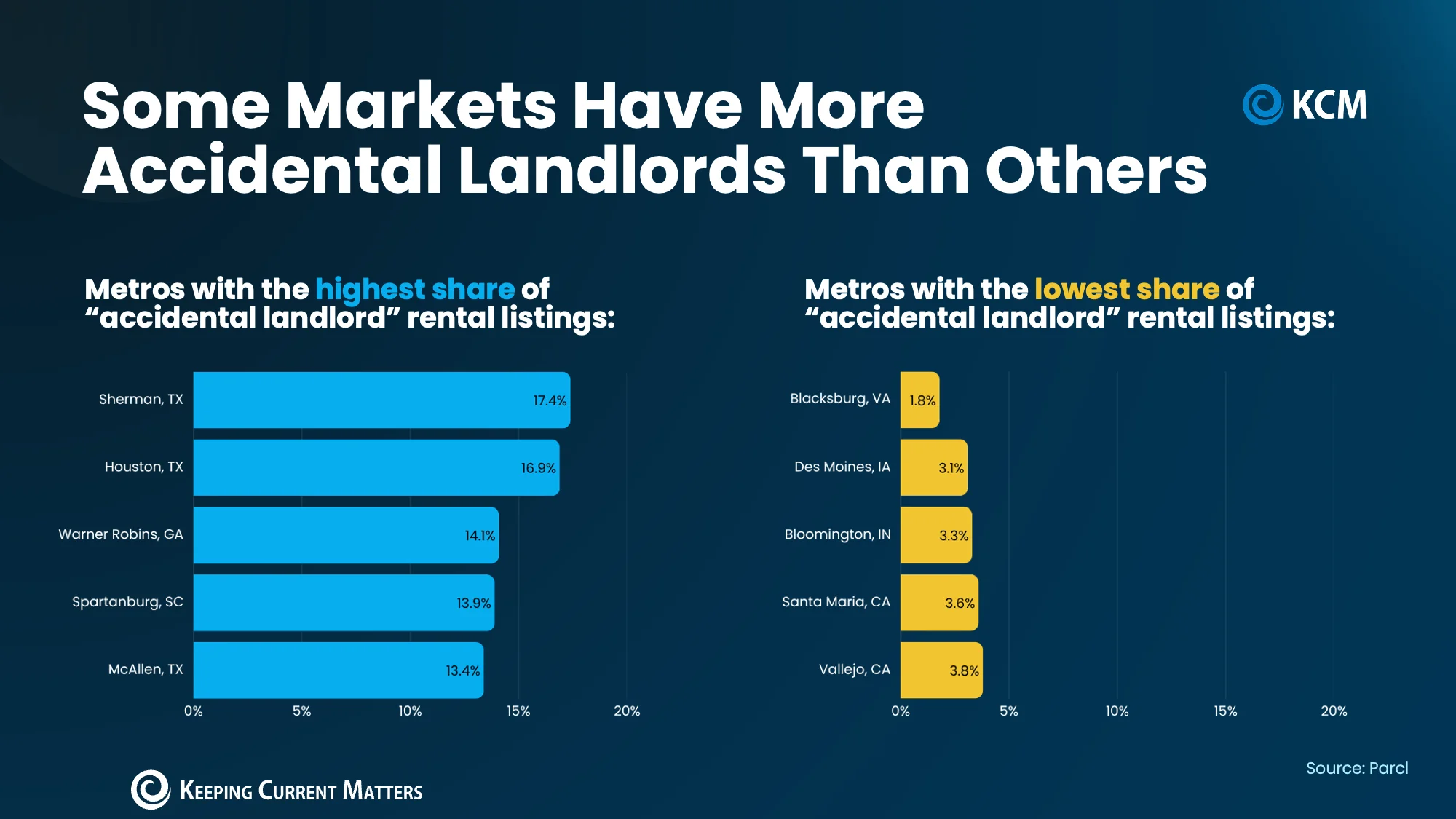
Parcl’s figures show how uneven the pattern is across markets. Homes previously listed for sale account for about 17% of rental listings in Sherman and Houston, Texas, compared with less than 4% in Des Moines, Iowa, and Bloomington, Indiana. Those gaps make national averages a limited guide for any individual seller. A broad share can point to a trend, but it can’t tell an owner whether a particular home is priced too high, poorly presented, or simply facing thin buyer demand.
For a specific property, the relevant questions are how comparable homes are performing nearby, whether the asking price reflects current buyer expectations, and what marketing approach can help the listing stand out. A local agent can help assess those conditions and compare the sale outlook with the practical demands of renting. If you’re working through this choice, the comparison should use properties that genuinely resemble yours, since broad market averages can hide differences in location, condition and appeal.
Renting brings operating costs and day-to-day work
Rental income can look straightforward on paper, but managing a property takes time and requires owners to meet obligations to tenants. Invest West Management notes that landlords may need to register a tenancy, provide required disclosures and keep the property up to safety standards. These are part of running a rental, not optional extras to be considered only after a tenant moves in.
The work can also include following up on missed rent, repairing damage between tenancies and responding to urgent maintenance problems. Some of that work is unpredictable: an owner may have a quiet stretch, then face several demands at once. Owners who hire a property manager hand off some of that workload, but take on another recurring expense. The choice is partly financial and partly about how much attention the owner can give the property.
Bankrate identifies several costs sellers should account for:
Landlord insurance, which typically costs about 25% more than a standard homeowners policy
Property management fees, commonly around 10% of collected rent
Vacancies, when mortgage payments continue without rental income
Repairs and routine upkeep add to that list. The financial picture depends on the property and its rental prospects, while the owner’s willingness to handle tenant needs matters just as much as the expected rent. A projected rent figure alone won’t show what remains after periods without a tenant, insurance, management and maintenance. Nor does it capture the owner’s time, which can become a substantial part of the arrangement.
Compare both options against local conditions
Renting may suit owners who want to keep the property and are ready for the responsibilities that come with tenants. For those whose preference is to sell, a slower market alone doesn’t establish that renting is the better route. A clear pricing and marketing plan from the outset can give a listing a stronger chance with buyers. That said, a plan can’t guarantee a sale at the owner’s preferred price; it can help make the decision more informed.
This is more significant than it looks: a change in listing status can turn a short-term selling problem into a longer-term operating commitment. Owners need to consider how long they’re willing to hold the property, what work they can manage, and whether the rental market for that home supports the decision. (And this is the part most people overlook.) Renting doesn’t erase the costs of ownership; it adds tenant-related duties and the possibility of gaps in rental income.
The useful takeaway for sellers is to compare specific options: what similar homes are selling for, how long they’re taking, and what the property could rent for after insurance, management, vacancy and maintenance costs. Local market evidence can make that comparison more grounded—and clarify whether renting is a deliberate choice or simply a response to a sale that didn’t meet expectations. The decision starts with a realistic view of both paths. Then the owner can decide which set of trade-offs they’re actually prepared to live with.