A transit line enters the build phase
The East San Fernando Valley’s planned transit link has moved into construction, putting a 6.7-mile light rail line along Van Nuys Boulevard on a path toward completion in early 2032. The $2.43 billion project is intended to improve access across the valley and ease congestion. Those aims describe the project’s case for investment, though construction alone can’t show whether the finished line will change how people travel day to day. That will depend on how well the service fits into the trips people already make.
For now, the milestone is practical: work has started on a corridor that will require stations, rail infrastructure and a maintenance site, as well as changes to utilities. Building a street-level line through an established urban area means coordinating construction with the streets and services around it. That can make the process visible and disruptive to nearby residents and businesses well before trains carry passengers. The long timeline also sets a high bar for keeping the project on schedule and explaining progress to the communities along the route.
Project scope and cost
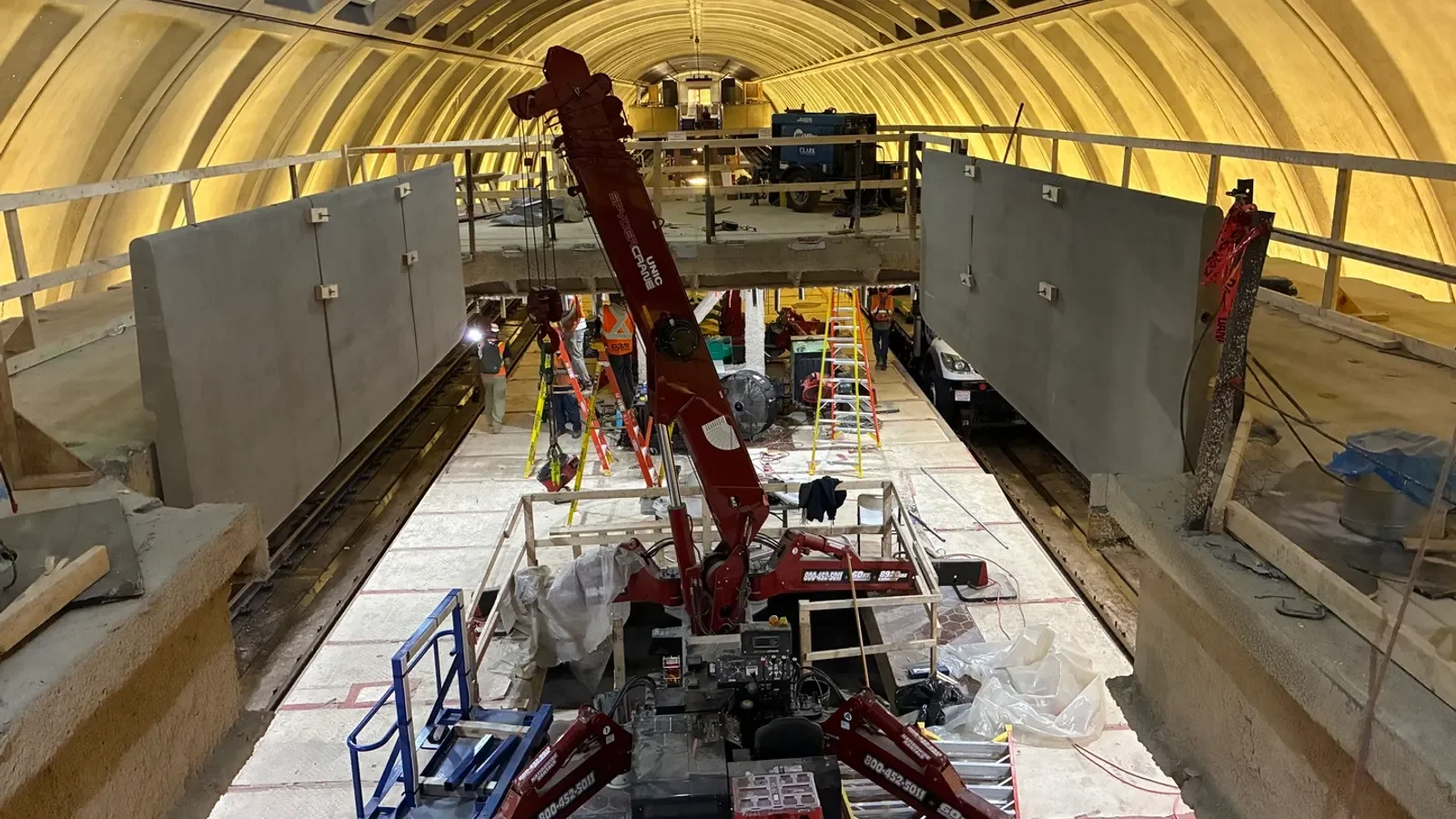
A Skanska and Stacy Witbeck joint venture broke ground at the Van Nuys Civic Center alongside LA Metro, civic leaders and community members. The work covers 11 street-level stations and a 26-acre rail and maintenance facility, plus shade structures and utility relocations. Together, those components show that the job extends well beyond laying track: stations must connect with the public realm, while the facility will support the line’s operations. Utility work, meanwhile, is a necessary part of fitting new infrastructure into a developed corridor.
The contractors signed a $1.9 billion contract with the Los Angeles County Metropolitan Transportation Authority. Skanska’s share is $957 million, suggesting a roughly even division with Alameda-based Stacy Witbeck. The larger $2.43 billion figure includes preconstruction costs. These figures refer to different scopes, so they shouldn’t be read as competing estimates of the same contract: one describes the contractors’ agreement, while the other captures a broader project total that includes earlier work.
The distinction matters when readers assess the price attached to the line. The available figures establish the contract value and the wider project cost, but they don’t break down every category of spending or explain how costs may change during construction. That leaves the headline total useful as a measure of scale, but limited as a guide to individual components. A major public works budget is easier to interpret when its scope is clear.
Transit and workforce plans
When service begins, trains are expected to arrive every seven to 10 minutes during peak periods. That planned frequency gives a sense of the service Metro intends to provide, though the interval by itself doesn’t tell riders how convenient a trip will be. Connections, station access and the destinations people can reach all shape whether a rail line becomes a practical choice. The stated goal of better access across the valley will ultimately be judged in those everyday terms.
Stacy Witbeck President Clayton Gilliland said the project’s value extends beyond construction, pointing to improved connections to schools, jobs, health care and neighboring communities. Those are broad goals, and the source doesn’t specify which institutions or communities will see the greatest benefit. Still, the categories help explain why a transit project is often assessed by more than its route length or construction budget. Access is the point; the test is whether the service makes useful destinations easier to reach.
The joint venture will also run the San Fernando Transit Constructors Careers Academy. The program will offer professional development courses to people living near the project who are interested in construction careers. That links the build to a local workforce effort, although the announced description doesn’t state how many people will take part or what outcomes the courses are expected to produce. A training program can widen access to career pathways, but its reach depends on who can participate and what opportunities follow.
And this is the part most people overlook: a project’s community footprint isn’t measured only by the finished stations. Construction jobs and training may matter to nearby residents, while the work itself can bring years of activity to the corridor. The academy gives the joint venture a way to connect the project with local career development. Whether that connection proves substantial will require more detail about participation and results.
Experienced local team
Skanska and Stacy Witbeck have partnered on five infrastructure and rail projects in Southern California, including the Sixth Street Viaduct Replacement Project in downtown Los Angeles. Their latest collaboration now enters a multiyear build in Van Nuys, with completion scheduled for early 2032. A record of working together can help a joint venture bring familiar processes to a complex job, but it doesn’t remove the coordination challenges that come with a new corridor and a long construction period. The team’s prior work is relevant background, not a guarantee of how this project will perform.
The partnership also means responsibility for delivering the construction work is shared between the two firms under their joint venture. Skanska’s disclosed $957 million share offers one concrete measure of its role; the source doesn’t give a corresponding figure for Stacy Witbeck. That gap is a reminder that a contract announcement may provide only part of the picture. For the public, the more immediate questions are how construction proceeds, how the work is communicated and whether the line is ready when promised.
What the project’s next phase will show
This is more significant than it looks: the move from planning into construction turns a proposed transit connection into a long-running public works job with defined scope, contractors and a target completion date. Yet the case for the line still rests partly on promised outcomes, including improved access and less congestion. Neither the contract nor the groundbreaking can establish those results in advance. The service will have to earn its place in the valley’s travel patterns once it opens.
If you’re working in this space, the useful measures to watch are the ones that connect delivery to the project’s stated purpose: progress on the stations and facility, the planned peak service interval, and the quality of connections to destinations named by the project’s supporters. The source doesn’t provide a ridership forecast or a detailed construction schedule, so those shouldn’t be inferred from the completion target. Here’s the thing: early 2032 is a destination for the build, not evidence yet of what the transit line will deliver.
That said, the project now has a concrete construction scope and a contractor team with prior regional experience. The next several years will test whether those pieces can be brought together while keeping the public informed about a corridor-wide build. A long wait. For residents, the eventual measure will be simpler: whether the line makes useful trips easier and whether the promised service arrives as planned.